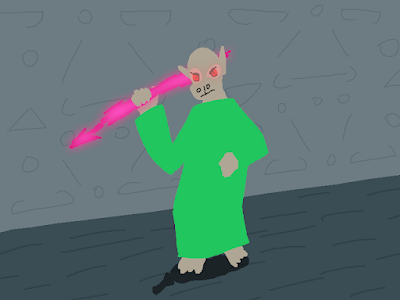
Showing posts with label Spells. Show all posts

Friday, July 31, 2026

The BIG Spell Table

Roll 1d100.

The BIG Spell Table
[1]
Not a spell- but a spell failure! This arcane formula is incomplete or intentionally flawed. Whatever you thought the spell might do; find the nearest corresponding School of Magic on this list and roll on its subtable. If not applicable, roll on the Spell Cataclysms table.

[2] Not a spell- but a method to acquire spells. Roll on the Cruel Executions for Magic Users table; slaying a magic user in a ritualized fashion with this method will grant you knowledge of one spell they knew in life.

If your magician can already suck out magical knowledge from dead people- then you learn a very Occult Spell from Silent Hill instead.

[3] This spell is stupid. Roll a d12 on the Idiotic spell table.

[4] Not a spell- but a Runebrand. This magic brand provides a small permanent bonus to anyone it is applied to, or a once per day cantrip-level magic effect for its wearer. Roll a 1d6 on the Witcher Runebrand Table for your brand. If you roll a 6, instead roll a d20 on the Random Discipline Table, which is tattoo representing that magical concept with a matching effect.

[5-6] Chaotic Burst! The spell caster must name a desired outcome or target of the spell; and the magic flies! Use the powers of Mana Points and their effects, with the number of Mana Points equal to the caster level. You cannot use the same effect twice in a single casting of the spell. Don't have Mana points? You'll have to use Hit-Points instead.

[7] You learn a spell that is quite amateurish, but charming. Roll a spell made by Your Apprentice.

[8-13] Mutation of a Classic Spell. Roll 1d6, then roll on its corresponding table.

  1. Knock
  2. Color Spray
  3. Sleep
  4. Hold Portal
  5. Comprehend Languages 
  6. Magic Missile (Same rules as magic missile; it just looks different.) 

[14] You learn the rituals and callings to perform a random Dark Pact.

[15] You learn how to cast magical curses. The next time you curse someone with your words, it can become a magic spell. Use the Freeform Curse Generator.

[16-18] Roll a Basic Starting Spell.

[19-24] Roll a Random Starting Spell.

[25] You learn a useful utility spell- roll on the Camp Spells Table.

[26-27] Instead of a spell, you gain a new face. The face appears on your chest; though it can be hidden under your clothes. Roll a 1d4 to determine where the face comes from, and what powers it grants you. If you already have a magical chest-face-spell; then just roll a Random Mutation.

  1. Roll a random face of the Many-Faced Man
  2. Roll a random surface from the Weird Monster Generator
  3. Roll a random face of a Hand-Face-Hand
  4. Roll a random Chaos Medallion Relief which also grants you a Medallion Power.

[28-32] You learn a first level spell. Roll 1d4, then roll on its corresponding table.

  1. Attack Spells
  2. Defense Spells
  3. Illusion Spells
  4. Summoning Spells

[33] You get some strong magic with some very glaring flaws. Roll 1d2 and then roll on the following table.

  1. Powerful Enhancements ended by Very Trivial Things
  2. Powerful Curses Countered by Very Common Things

[34-39] You learn a spell inspired by the bards. Roll 1d8 on the table below, then once again on whatever table you randomly selected.

  1. Hedge Wizard
  2. Green Colored Sun
  3. Adventures in the Upside Down
  4. El Bosco
  5. Moth Tower
  6. Mumble forth verses of subtle control with Purple Magic.
  7. Learn a random magic Song.
  8. Generate an Orc Song. It grants magical power- but only to things related to the song.

[40-43] You learn a Monster spell. Roll 1d4 to determine the origin, then on the relevant table to learn the spell.

  1. Goblin
  2. Gnoll
  3. Orc
  4. Instead of a spell, you become infused with Fairy Magic. Gain a Blessing of a Fairy Queen.

[44-45] You can condense magic energy into a Magical Skillgem. If socketed into an item, it grants its user a special power. Roll 1d3 to determine the color (Red, Green, Blue) and then a 1d12 to determine the exact power it grants.

[46-50] You learn one of the 36 Magic Spells.

[51] You learn a spell that is strangely interconnected to everything else. Roll on the Blog Spells Table.

[52-55] You learn a personalized spell. Roll 1d4 to determine who, and then roll on their spell table for the exact spell of theirs you steal.

  1. Anten the Murderer
  2. Walks-In-Emeralds
  3. Hotar of the Holy Vapors
  4. This spell acts as a Turn Undead; but turns something Weird instead.

[56] You learn a spell relating to arcane symbology. Roll a random Symbol Spell.

[57] You learn a Random Cleric Spell

[58] You learn a spell related to Exploring Dimensions

[59-63] You learn a Generic Enemy Spell. Perfectly generic, perfectly serviceable. You'd do well in the Monster Manual.

[64-71] You gain a spell of the rainbow. Roll 1d6 to determine a random color, then on the relevant table below.

  1. Red
  2. Blue
  3. Yellow
  4. Green
  5. Purple
  6. Orange

[72] You learn a spell relating to magical runes. Roll a random Rune Spell.

[73-75] You learn a chaotic, strange, or highly-random arcane formula. Roll 1d3.

  1. Weird Low-Level Spell 
  2. Altered Classic Spell
  3. Weird High-Level Spell

[76] You learn a spell used in war- roll on the Warfare Spells Table

[77-79] You learn a spell relating to nature spirits. Roll 1d4 and then roll on the relevant table below.

  1. Dryad Spells
  2. Satyr Spells
  3. Mermaid Spells
  4. Fae Ice-Queen

[80-81] You gain the ability to create, bind, or summon forth a creature. This creature is not a short-lived conjuration but is alive. Each one has a will of its own and must be sated or bound magically to serve. Roll a die to determine what Hit-Dice of monster you get; apprentice should only be rolling a 1d4, where as master wizards or archmages might roll a 1d8 or even 1d10.

  1. Unfortunately you are only able to summon a shitty Pest.
  2. Hearth Minion
  3. Malevolent Zombie Servant
  4. Trapestrod
  5. An Intruder
  6. The Unconquerable Ulazoo
  7. Angered Nature Spirit - Treat the "Why is it Angry" table as Bewitched. It will break free in 1d6 years of serving you.
  8. You revive a long dead Lich. The Lich will serve you, but has its own agenda and jealously guards its own Signature Spell.
  9. Big Scary Ass Demon
  10. Oh shit. You accidentally summoned an Elder God! Make a saving throw against magic to close the portal in time; if you succeed, you survive but your mind is burdened with Terrible Knowledge. If you fail; the elder god sucks you through into the void and you disappear forever. Alternatively if the proper ritual protections are prepared; you can summon one of these powerful beings as a supernatural patron instead.

[82] You peek into the primordial past from the shamans and spirit-callers of old; learning one of the First Magic Spells. For every year you spend sequestered in the wilderness living as a primitive; you can roll again on this table to learn another.

[83-87] You learn witchcraft. Roll a 1d6 to determine the origin of the Witch magic you are learning, and then roll again on the relevant table.

  1. Forest
  2. Sea 
  3. Swamp
  4. Mountain
  5. Squirrel
  6. Instead of a spell; you learn a method or two to Bewitch someone. Bewitching someone is like Charm Person, but better.

[88] You learn all the dark powers of an Anti-Sage. If you commit a deed of great evil, these spells count as though you are one caster level higher.

[89-94] You learn a potpourri spell. Who keeps inventing these?

  1. You conjure a basketful of some Magic Fruits.
  2. You can perform Star-Doctor Experiments; using your caster level as the die size.
  3. You speak a Magic Incantation. The spell does about what it sounds like it would.
  4. Lean a random spell of the Mindscape.
  5. Generate a Weird Spell.
  6. Learn the mystic ritual of the Kindlesoul 
  7. Upon casting this mysterious protection spell, you realize it does nothing until you die
  8. Learn the Spider Spell.
  9. Learn a ritual to become the Master of 23 Men
  10. You can stick a sword in a dead guy's face to make a Swordyface
  11. Learn a powerful Enchantment that can reach across the whole world! 
  12. Roll on the Trickster Special Ability table. This isn't a spell; you just have this ability now. 

[95] You learn a spell with no levels- Roll on the No-Level Spell Table. These can be prepared with any spell slot or use of any mystic resource of any level.

[96-97] You learn how to call forth powerful mystic weapons. Roll 1d4.

  1. You learn a Magical Weapon Summon-Spell
  2. Pick two weapons from the Celestial Armory and they both appear; one in each hand.
  3. You call forth one of the Almighty Astras. Roll 1d2 to determine which table you roll on. You can call forth the Astra for a number of rounds equal to your Caster Level +1.
  4. You need no weapons when your hands will suffice! Learn the basics of Gestural Combat- gain the first two and then two more random Proscribed Gestures. Increasing your Will and unlocking new gestures simply requires more Juice.

[98] You learn all the basic powers of a Sage. After you commit a deed of great good, you gain all the advanced powers too.

[99] You gain a powerful spell that grants you a Godly Power for a single day. When the spell ends, you fall unconscious and slip into a coma for one year to recover from such awesome powers in your mortal form. This doesn't happen if you're already a demigod.

[100] Instead of a spell, you get one Wish. No twists, no catch.

Tuesday, November 7, 2023

Cantrips Ain't Easy + Demon Summoning for Dummies


I've already talked about this concept before, both in the Magic Cards post, which was more based on a way to put magical one-time use spells into a fantasy world, and then in the Freeform Curse generator, which was a bit more folkloric and a way to make a fantasy world feel a bit more "mythological" in its moral landscape. A lot of people include within their fantasy settings the concept of magic being more common- including to the point of most (if not everyone) learning a few basic magic spells (cantrips) in order to help with daily life. The reasoning behind this being that if low level magicians can cast weak magic with relatively little investment; then it makes sense most people would want to learn at least some magic given the extreme utility of some of the weaker spells- even spells like Prestidigitation or Light would have a profound impact on any society, especially one stuck in a anachronistic medieval morass of development.

However, both of these posts above illustrate something I think is interesting; a typical inversion of the fantasy trope of magic being weak for beginners, and strong for experts. Of course, it makes logical sense that magic should operate this way; a master wizard can throw fireballs, while an apprentice can only conjure a candle flame. This is obvious even, a common trope. But it doesn't necessarily have to be the case; and even if it exists for some forms of magic, it doesn't have to be that way for all of them.

Remember; magic doesn't necessarily follow real world skills, nor do all skills directly follow this correlation of low skill = small & simple and big skill = big & complicated. While it makes sense that an amateur carpenter can build a birdhouse but not a human-sized house; I wouldn't trust an amateur surgeon to make a small and delicate incision as opposed to say, amputating a limb. I think the closest analogy to magic when it comes to mundane skills would be demolitions and pyrotechnics. Any idiot can blow the shit out of something, since they just pile on the TNT- but only a master can say launch a human out of a cannon. After all, too little and they won't fly, too much and they'll explode. Controlling arcane power could very well be the same.

This also goes hand in hand with the concept of amateur magic, magic backlash, or unintentional side effects of magic creating various monsters, curses, or negative magic effects in a setting. When old farmer willow asks you to bring his dead crops back and you say the words, you're also going to bring back the skeletons of ancient warriors buried deep beneath the farm as well. They can hear the words under the soil just as well as the dead plants can. The same applies to lighting a candle instead of blowing up half the inn- the portal you open to the elemental plane of fire isn't so easy to shrink to the exact right size- as such, a "cantrip" or minor trick of magic is actually much more difficult to learn and master then a big and powerful spell. Most magic users spend decades of their life perfecting this fine art of control. Amateur wizards blow themselves up all the time, because they don't have this level of control. Cantrips are the sign of a powerful magician; not an amateur.

But moving away from just "magic" in the arcane sense, the stuff that wizard's use, let's focus more on the folkloric style of magic. The above really gave me an idea for magic being a serious problem; not because it's hard, but because it's way too easy for someone to fuck everything up. Like for example- anyone can summon a demon. Naturally, demons like it this way. If it was too difficult or required some high-end rituals and powers to do so; it would be too rare an occurrence. Oh no, demons make it very easy to call them, and for this reason, people often oblige.

"Ritual" magic in most TTRPGs tends to be a high end thing, often reserved for the Wizard or magic using class, due to being good set dressing to powerful and unique magic effects. However, the entire concept of a "ritual" is to be a set of steps and procedures that can be followed time and time again. This is the exact type of magic that is most likely to be spread far and wide, in shadowy alehouse corners and campfire conversations.
"If you sacrifice a living thing- like a chicken or a goat- and invoke the powers of darkness, you can make a demon come to you. They will serve your command or grant you a wish."
"Aren't demons dangerous?"
"Yeah- that's why you draw a circle of chalk at your feet. That means they can't hurt you- at least until you leave the circle..."

Demon Summoning for Dummies
In order to summon a demon, you need only know the steps. Different cultures and races may have their own steps or their very own demons they deal with- but for humans, this is the most common one.

Note: These steps are listed in this way so they can easily be disrupted. If a dark presence has formed- casting a Light spell can banish it and disrupt the ritual, so can coming in loudly and screaming into battle, or obviously saving the sacrifice before it or they are killed, etc.

  1. It must be at night, or in a very dark place. Candles are used during rituals so as to not produce too much light.
  2. A living thing is sacrificed and its blood is run over the ground or on an altar.
  3. While the animal or person is bleeding out- the one who killed them must speak aloud and speak the name of a spirit to call them. For the sake of demons, simply saying "I call upon the darkness" is enough to call a random demon.
  4. Everyone must be then be quiet and wait for a dark presence to form and speak.

Once these steps have been completed, a dark presence will appear. This presence will typically be a mass of shadows in the corner, or appear in a mirror or reflective pool of water. The presence is the spiritual form of the demon, which has not yet manifest fully into the living world. However, it can communicate and speak- its voice often carried by the rustle of wind in the trees or a groaning beneath the earth. Typically, the demon will ask what is willed of it- and several things can happen.

If the demon is significantly stronger then the individuals summoning it and it is being bid to do something very difficult, impossible, or against its nature- it will manifest and attack. Use HD or level of the caster x2 vs the demon's HD. If the demon's is still twice as high, it's just going to kill them for the arrogance for disturbing it. If the summoner is standing in a chalk or salt circle, the demon cannot attack them, but will still destroy or attack anyone else nearby out of spite.

If the demon is significantly stronger then the individuals summoning it, and is being bid to do something evil, malicious, or well within its purview of interest- then it will oblige the request. Demons are tricky, and prefer to leave the world a much worse place then they found it. Whatever request was given to them will be twisted and exaggerated to cause as much chaos and misery as possible. Often, demons will make the situation worse in an attempt to get the individuals to call them back again to continue the cycle.

If the demon is roughly equivalent then the individuals trying to summon it- it will listen to the request fairly and fulfill it or decline if it is too difficult. The demon is unlikely to want to get on the summoners bad side, but will absolutely still take advantage of any weakness or opportunity it can sense. This is still the most "fair" demonic interaction.

If the demon is significantly weaker then the individuals summoning it, and is being bid to do something very difficult, impossible, or against its nature- the demon will lie and make excuses, demanding more sacrifices or proclaiming itself to be the lord of hell itself, insulting the summoners and threatening them with their destruction, etc. The demon will lash out via curses or possessing nearby objects to fly, control nearby animals to attack, and so on.

If the demon is significantly weaker then the individuals summoning it, and is being bid to do something evil, malicious, or well within its purview of interest- the demon will be forced to manifest and become the servant & familiar of the person who summoned it. It is still not likely enough to be powerful enough to fulfill the request on its own and will assist the summoner as the "devil on their shoulder".

While the "strength" of the summoners could be literally based on the HD or level of the characters, there's also a greater component of spiritual strength. For example, an anointed priest could call upon a more powerful demon then a layman and have more guaranteed protection given their status. Human nobles with no special skills or powers are also likely considering "greater" then an average outlaw to the demonic forces due to their position in society- but this could just as easily be flipped on its head for calling upon spiritual forces like jaguar demons from the depths of the jungle hells- an entity like that would consider a fellow hunter or outdoorsman a far more equal to itself then a city slicker regardless of their wealth or social connections. Following these mechanics; a Cleric or Paladin should count as a level or two higher when compared to the HD of the demon. In addition, if your game has skills, then every rank or two of Arcana or Demonology should also count as a bonus +1 to your HD when summoning a devil. Your character may be a withered old man but if he has memorized the names and guises of a hundred dark ones you can bet he can command some sick ass demons.


Once a demon has "manifested", it has the appearance and powers of its statblock. Typically demons can do things like travel long distances quickly, transform, turn invisible, cast spells and curses, etc. It will use its abilities to fulfill requests as well as attack any foolish summoners who anger it.

It should also be noted that these mechanics, while known to you, are not necessarily known to the people of the setting. Only the ritual steps, and even those may be incomplete or rife with misinformation. As such, demonolgists and sorcerers can summon demons much more reliably and safely by calling upon demons who fit what they need for a given curse or summoning and that they can control. It's also pretty much designed to cause as much chaos as possible for weaker beings who use this ritual; which is the point. The more desperate and lowly something is, the more demonic forces can take advantage of it for their own ends. This also leads directly to fun story moments; bandits accidentally summoning an demonic prince of hell and getting gutted, or a powerful necromancer now having an annoying imp following them because they wanted to "gain more knowledge" and the idiotic thing just keeps stealing books for him and piling them on his bedsheets every night.

You might also ask, "why the hell would anyone summon a demon in the first place?!" and that's a good question. There are actually a lot of reasons why. I dislike settings or cosmologies that have "deals with the devil" being a literal component of the world or setting- not only is it incredibly cliche at this point, but it doesn't make logical sense. Selling you soul to the devil is not always literal thing, it's a metaphor meaning doing evil or violating your own moral compass to accomplish something or take advantage of someone. Demons don't need you to hand over your soul to get one over on you, just summoning one and sacrificing a living thing and also fulfilling whatever crass or selfish desire or petty plan for revenge is enough to damn you anyway.

There are also a lot of situations where one would be desperate enough to summon a demon. Here's twenty examples.

Desperate Demonology Table - Roll 1d20
[1] Group of bandits are held up in a fort. They're under siege by the local lord's forces and are running out of food. They take the last scrawny chicken from the courtyard's coop and perform a ritual to try and negotiate a way out of here.

[2] An older prostitute in a city has lost much of her beauty over the last few years- and will soon not be able to attract enough clients to make her living. Instead of become destitute, she nabs an orphan off the street and is getting ready to sacrifice him in exchange for returning her youth.

[3] Someone in your family is going blind. The local healers cannot help, and the evil-racist church refuses due to their status as a mixed breed person. You decide to spite the church since they won't help you anyway- and slit the throat of a goat to see if darker forces can heal the ailment.

[4] Group of musicians performing at a local fair were stopped by a young and arrogant nobleman's son. He ordered all their instruments broken and laughed at them. Because of their status as lowly travellers, and the young son being out of reach for the law- the musicians circled their wagons and are now performing a ritual to get revenge on the arrogant noble.

[5] Pirates stuck at sea within a dead zone- no wind or currents. Totally unable to move for multiple days, they will surely die unless they do something. They pick the youngest cabin boy and move to have him drowned in the ocean at midnight to call upon the devils of the deep to let their ship sail again.

[6] Proactive village elders, disillusioned by their years or peace and prosperity under the local nature spirits who have protected them, are concerned about recent pillaging and bandit attacks. In order to protect their village; they perform a sacrifice of a pig to their local shrine- not realizing they've called something else this time; pretending to be the deity they've relied on for so long.

[7] Lazy, ignorant farmer's back is acting up again. He's not gonna take it this year. Takes his old horse out back with a knife and wants to sacrifice a demon of sloth to harvest and mill his grain for him.

[8] Kids at an orphanage have an extremely cruel and strict mistress who they can't stand anymore. They find an alleycat and decide to sacrifice it to call upon a demon to rid themselves of their mistress once and for all. Bonus points if the party stumbles onto the ritual and the kids falsely assume they are the demon sent to take care of the problem before the real demon shows up. Yes this is literally just copying the Skyrim quest, I still think it's pretty good.

[9] Blacksmith's son ran away from home, went missing, presumed dead and eaten by something in the mountain. The blacksmith is a patient and faithful man; but can't stand the loss anymore and decides to sacrifice an animal and call a demon to find or bring their son back. The blacksmith is aiming for a very powerful demon to accomplish this goal, and (correctly) believes he can control it by twisting its nose with his tongs. But he also (incorrectly) assumes the demon can actually bring his son back, and not just a revived soulless husk.

[10] Clever merchant has his grip on every local townshed and tradesman, gaining half his money through bonds and loans he's given without lifting a finger himself. Excessively greedy- the merchant buys a slave girl to sacrifice to summon a demon. Not for a favor, but to get some insider tips from his own kind.

[11] The local priest is preparing a sacrifice of an all white lamb to summon a powerful demon. The reason? To beat the shit out of him and get back the souls of some of his flock, who recently died in a plague, before they could be well enough to give their final confessions and cleanse themselves of sin.

[12] Insane wildwoman kills people in the woods and whispers dark names she learned as a child when she fell into a cave for three whole days and went insane and nearly died. The catch is every demon she summons is instead set loose- she doesn't ask any favors of them, merely creates them and moves on- reveling in spreading out the great darkness she once knew. 

[13] Dumbass wizard apprentice at wizard collage wants to summon a demon to punish fellow classmates for insulting and bullying him. The demons are very resentful as he doesn't allow them to kill his classmates- merely pranks and humiliates them before dispelling the demons before they can have any real fun. With his knowledge he can summon up to three demons before he conjures up something WAY too big for him to handle.

[14] The Storm King can create tornadoes and zephyrs at his will; such is his brightright of the divine desert royal bloodline. But in recent years, this gift has been fading in each successor to the throne until him, barely able to conjure a dust devil. Fearing his future son will not have this power at all and will become dethroned as a result; the king orders a dozen palace servants sacrificed in a bloody ritual to call upon all the hells for a worthy mate. The succubus he summons up will be the mother of the antichrist.

[15] Scholar, obsessed with completing his works on ancient history, wants to call up spirits of the dead to get first hand accounts of his lore. Sadly, demons catch wind of his bloodletting divination tricks and whisper to him in his sleep to sacrifice a life, his old messenger owl, so they have a gateway into our world.

[16] Cruel and paranoid warlord who managed to conquer four cities now obsessed with his three lieutenants, each in charge of another city, who may betray him at any moment and try to unite to rise up against him. He kills a captive soldier and summons a demon to spy on them and rely information; but with each day his paranoia only grows as the demons feed him lie after lie.

[17] Beggars in the city grate are usually content with their lot; but one night when the snow and rain got too much for them, they decided to take shelter in a storm drain. Their, they found dark writings on the wall and, putting their heads together to make out what they mean, they could only piece together the steps of a ritual to "grant happiness", but not actually what that means. They've tied the tails of seven rats together, and will crush them all with a great mallet tonight- summoning something far worse.

[18] Constantly ill and bedridden young lady, obsessed with romance novels and living in her own fantasy world. Needing a friend more then ever, she kills one of her songbirds and drizzles a ritual circle on her bedside table- hoping to get a "friendly" imp familiar as a companion.

[19] Temple priestess of the heathen "foreigner" religion is an expert at summoning up devils and creatures from other worlds from her many daily sacrifices and captives from slaver parties. However, one week from now is the equinox where she will have her heart removed to please the God of the sun and return the light back to the world. Until then, she is trying hard to secretly gain power over the many devils and demons the temple summons to fight her way out.

[20] Horrible, wealthy old man desires a young and beautiful bride- but she continually refuses his advances. One night, he pays local thugs to capture her and bring her back to his mansion- but not for what you think. He's going to kill her, summon a demon with her sacrifice, and demand the demon drag her soul straight to hell for slighting him.

Monday, January 30, 2023

[ToM] Gnoll Camp

The Gnolls have set up a camp high above a desert ridge. This gives them a view over all of this part of the valley; everything from the desert to the savannah and as far to the perching stone. They are gnolls and make their living on both robbing as well as eating travelers. These gnolls are a lot more lean and well prepared then gnolls most people in the civilized places are used to- most of the people that end up in this valley are tougher then the normal stock- given they probably crossed through a desert to get here.

There are about eighty gnolls that live at this camp. Twenty are noncombatants (children, elder males). Of the rest, about half will be out hunting or patrolling at any given time, but they are notably less active in the day and more will be at camp (they are mostly nocturnal). The camp is visible from a good distance from both the fires, the smell of cooking flesh, and the tents made of skinned humanoids. You can roll a reaction check if you approach with your weapons sheathed, but it will probably end badly. Their only useful things to trade are information, gnome leather, or a four man guard that will follow you into the temple and help you fight monsters (the four gnolls they'll give you are the dumbest and smallest runts). Witchfinger will absolutely give you the gnolls as permanent henchment if you bring him the head of the leader of the Orcs, who disappeared into the temple just a few weeks ago.

The Gnolls are ruled by a shaman, who is a superstitious magic user skilled in necromancy and basic elemental magicks. His name is Witchfinger (most Gnolls name themselves after the most interesting thing they've eaten) He knows healing spells; but only uses them sparingly even on his most loyal warriors- those who succumb to their wounds are too weak to survive in his tribe and are of better use dead.

Witchfinger (3+3 HD) has also stolen some magical power from a nearby site- the Overlook Mesa. This place has connection to the harsh desert wind- and is the source of power for his Whirlwind spell. If you desecrate this site, Witchfinger will lose this spell permanently, and will likely seek out the one who did it to extract terrible vengeance upon them.

Whirlwind
This spell create a whipping wind about twice as big as a man. It goes as the caster directs it- they must channel and chant to move the wind about as it goes. Anyone struck by the wind will find their skin ripped by sand and harsh hot gusts, dealing 1d4 damage, and they must save or be knocked to the ground. Anyone laying flat on the ground is immune to this spell's damaging effect, but they cannot get back up if they failed their save until the wind passes over them or someone comes to help them. The whirlwind can be parked directly on someone if Witchfinger really doesn't like them. The wind moves as fast as a man can run and can go as far as the caster can see- but will break apart if moved through rocky terrain or vegetation- as it will break up the mini-storm.

Saturday, October 22, 2022

8 Magic Songs

[1] Bourree of the Bastard
This song is played at a frantic pace; best played on drums made of human skin or a decaying violin that shrieks. Anyone who hears this song begins to feel both rage and a sensation of revelry at the same time; a sort of casual violence and cruelty overcomes the listener; no morale checks are rolled for those who can hear this song.

[2] Song of the Skyless
This magic song is special to those who have spent their entire lives underground. To anyone who has ever seen or lived on the surface world; the song sounds sort of tinny and wrong, but to those who have only known the underdark or subterranean places, this song is enrapturing. If you play this song to a being who has only ever spent their life underground; treat your reaction check as the highest possible result for this creature. For unintelligent creatures, the song is simply a pleasant noise, so only treat reaction checks rolls as a +1 for the pleasing melody.

What creatures have spent their whole life underground? Dwarves (except nobility) have a 1 in 10 chance to have never gone to the surface. Orcs, Drow, Gnolls, and other cave dwelling races only on a 1 in 4 since they frequently raid the surface world. If creatures are in a group together- assume the ones who can hear the song get the best reaction check but the rest go along as normal- treating your song as some kind of enchanting witch spell instead of a special song just for them.

[3] Melody of Mold
Low, ambient sound usually enchanted on old stone, or more rarely, plays softly from clusters of glowing mushrooms deep underground. Every mushroom, growth, mold, or myconid near the sound becomes resistant to fire- fields of sporecaps are protected by their own natural melodies. Fire only has a 1 in 6 chance to spread when you try to light a room full of shrooms. Blowing them up doesn't work much better- they'll hide underground before popping back up again undamaged. Clouds of spores or pollens are not protected by this spell, so you may be able to clear a safe path through a toxic mushroom swamp by burning the clouds away and giving yourself a brief window to pass.

This sound is considered to be a natural phenomena. Some say it's the closest things that mushrooms have to a God- a sort of proto-creation of natural harmony and cooperation joined together.

[4] Song in a Shoe
This song can be played on any instrument, but always appears as a pair of silver shoes with a unique flair or in the style of the player of the song. These shoes grant fleetness of foot- a traveling speed increase of one sixth or one extra hex per day of travel, and those who wear these shoes are never surprised- but the shoes give off the song with each and every step the wearer makes, making stealth impossible and clearly showing the wearer is under the effect of a spell unless if they have instruments they can pretend to play to cover up the sound of the song.

The Song in a Shoe keeps working for one full day or until the wearer stops walking for more then a turn (going into a dungeon, traveling by boat, riding a mount, or making camp stops this spell).

[5] Ragtime Rites
Fast paced, engaging song played by a group. While most funerals are quiet, mournful affairs, this song is more upbeat and energetic. It has the effect of calming and weakening restless spirits- causing the undead to return to their eternal rest after a bout of spirited dancing. Violent undead, however, will still attack. Each round the song is played, all undead nearby will dance, with restless and evil undead or servants of necromancers taking 1 damage per round until destroyed.

This song is a specialty of the Merrymarrows, who do not take any damage from the song, but it helps get their old bones moving. It is for this reason that the lands they hail from have such colorful funerals; it's an excuse for the skeletons to party while putting down actually dangerous undead.

[6] Goblin Song
This son is performed most commonly by goblins in a goblin war band- which is basically just what happens when more then a dozen goblins get together and get bored of messing with each other. Sounds suspiciously like the Melody of Mold just with scratching goblin singing over it- considering the melody is the goblin's second favorite song they probably just copied it. It has a similar effect, except it applies to all goblins in earshot, who gain +2 temporary Hit-Points.

Whenever this song is played; no actual instruments are needed, just various objects to smash together, bones to clatter, or the occasional cat that they stick pins in to make an instrument.

[7] Lawful Litany
Imbued with the powers of Law, this alignment-based song has a holy sound. If this song is playing, any lawful cleric will Turn Undead as though one level higher. In addition, unholy noise, demonic chants, and spoken curses will fall dead in the throats of the sinners; cancelling or silencing the spells of those of Chaotic alignment.

The twinkling highs and harmonious voice of this song are truly beautiful to hear. It is said that this song is a copy of a copy of a memory of a dream of a holy man once allowed to hear one single song in heaven.

[8] Rhetorical Requiem
Only the name of this song is known to people- the words and how it goes is not. This song is not remembered by anyone who hears it- only those who know how to play. While the song itself is moving, immediately after it is played, all who heard it forget its details and the performance. The subjects of this spell lose all memory of the performance itself; just that they "heard" the song. This also applies to anything said or heard during the song as well- which fades into its performance. You could accuse someone of murder with its lyrics, see their horrified reaction at being found out, and then when the song ends they forgot you ever accused them of anything.

This song has been used by many to fleece patrons, to investigate rumors, to trick and confuse. But be warned, those who cannot hear the notes being played will remember everything they have seen and felt. This is the reason why the wise always keep a deaf man with them when they hear the strings play.

Monday, May 16, 2022

The First Eight Spells

In the beginning, all magic was natural and instinctual. The first beings who wandered the world; the ancient hyborean great ancestors to mankind, the first highest of all high elves, the lizard-men of the most ancient humid days just after the end of Primordis; whoever they be, magic came easy. It was not formula, but as per intention and imagination.

But something changed; perhaps the old bloodlines grew weaker as they were distanced from creation's womb. Perhaps logical thinking and language took over the earliest societies- and this too shaped minds from flowing with pure sensation and instinct into logical and analytical. Something given a name is forever changed by it; more reliably and knowable, but not more powerful.

The first eight spells were created by the first great sorcerer; an ancient shaman who grasped the mysteries with his boney old hands. He was killed by a jealous rival, who drank from his skull and diluted the first great mysteries as their blood mingled together. But these first eight spells are pure. Perhaps in your setting, these are the only spells that exist at all; magic can still exist outside of spells, but these spells are their own "thing" in the wider world of magic.

All of the spells below are powerful, primordial, and flexible. Any magic user or sage who wishes to learn them must embark on a vision quest and connect with the cosmos to learn them. Once learned, they can be cast whenever you wish- expending mana points/spell slots as per GM discretion to whatever end or level of power the spell is trying to achieve. There are no spell levels. The effects of these spells are spontaneous and flexible; these first spells are infinitely more restrictive then the flexible magic before words; but are still rooted strongly in the ancient past of experience over understanding.


The First Eight Spells

[1] The Creation of Flames
With this knowledge, the caster can create fire. Fire requires something to burn; wood or linen for small flames. To burn a living things requires an amount of strength and malice out of proportion with those who first crafted this discipline. While these are the first eight spells, this itself is the ancestor to all of them. This is the first spell, most simple and pure of them all.

The type and shape of the fire is determined by its maker. Originally, simply lighting a small fire to survive the night is enough. With enough focus, the fire can be created in air, shaped into a ball or blasting wall that moves forward to consume. All fire created from this magic is "real", not magic, it burns as the elemental flame. Anything it warms or cooks is as warmed or cooked as it would from a natural wildfire, lit by a strike of lightning.

Simple strikes with this spell of conjured bolts or jets of flame deal 1d6 fire damage to anyone within a stone's throw. The number of dice increases to the number of targets; a bigger conflagration is also hotter and more intense by its design. The ultimate pyromancy would be to be consumed with ones own flame; Hit Points may be added freely to the damage of your magic blast at a ratio of 1:1 for increased damage and strength.

[2] The Calling of Beings from Other Realities
To summon a being from another realm; one requires the correct portal or threshold from which to call them. To summon a creature from the depths from the sea, one must stand on the shore. To call the spirit of the dead, one must stand at the threshold of a cave or great hole in the earth; of where the dead go. More arcane beings require more arcane mediums with which to appear; a smoke black mirror or a creation and graph of numbers to commune with beings from the realm of pure logic.

The beings from other realities operate under their own morality and have their own goals; they may not answer a call. The only way to ensure they come is to have a connection; the descendant by blood of the ghost you wish to speak to. Sacrifices of blood or treasure may appease or excite one entity, while it will disgust and repel another. Once the threshold and lure have been completed; the being will come when called by its name.

As has been known since the dawn of time; to simply call something does not mean one has any control over it. Any caster of this spell can safely call upon a being of HD equal or less to the caster's own. Otherwise, you have the means to call them, but not the means to force them back from whence they came.

[3] The Guise of Invisibility
Pull over oneself a cloak. It can be seen thru in all directions; you have become invisible to the naked eye. This spell grants the gift of the night. Putting this spell on makes the caster and all they immediately carry invisible in all directions, though no other senses are yet fooled. Footsteps still crunch against the snow, and anything new that falls onto their unseen body remains visible. Leaves, paint, or water all collect on their shoulders and frame, revealing where they are.

This spell fools only the eyes; but how the eyes see varies. Those of exceptional vision may be able to see the slight ripple of dust and air around the otherwise invisible figure. Certain other methods may be able to counter the effect, such as a silvered mirror or looking through a hole in a standing stone, which are known to allow those of normal sight to see the invisible. It is not only the spellcaster who can be put under this spell however; an object or even location can be masked in this way, disappearing from sight.

The only limitation of this spell is time and number. Someone who pushes the limits may be able to cast their glamor over several people who are touching them when the spell is first cast. The spell will last a number of turns equal to the level of the caster, or a number of days for a stationary, nonliving object or place. Parts of a larger thing could also be hidden away; a single door on the side of the tower, or the caster's own hand, pretending it was cut off in a fierce battle.

[4] The Gift of False Life
Life is a gift. Living things grow and change, where as the inanimate does not. It can only act when acted upon; life and the spirit are one in the same. But what of those things with life and motion, but no soul? With this spell; the caster may imbue life within a nonliving thing. Objects given life in this way are unnatural, they move and bend as best they can, obeying only the commands of their creator. The price of false life is true life; ones own life force or the life force of a sacrifice must always been given up in exchange to give false life where there is none. Every Hit Point drained from the caster or a living sacrifice is granted to the false life of the subject of the spell; or one day of deep, true exhaustion to equal one hit point.

Larger objects take more life to animate. Animated things have stats abilities equal to what they would be if they were alive; along with the properties of their inherent material. Things more in line with a living shape, and things with material more similar to living material, are easier to animate. For this reason, the bones of a long dead person are very easy to animate into a skeletal servant. Random familiar objects; tomes which scramble their own letters and broomsticks that fly, can be animate for a larger cost, but may remain animate forever as long as they aren't destroyed.

It should be written here that using the life force of an animal, plants, or a living person as a sacrifice is one method of powering this ancient magic. But be warned; those who go unwillingly into the item will make the item also unwilling; a glowering hatred forms when one steals a life to create their own, trapping it into a prison for their own purposes.

[5] The Journeying between Distant Places
Before any map was drawn, places where only known by their direction and the landmarks that led there. To the north was snow and ice, far beyond the mountains of the spine. For one to reach a distant place in a moment, this spell was created.

This spell allows the caster to travel alone or with a group and everything they carry along a distant horizon. Perhaps a small trip of a day's worth of travel would allow a whole army to travel in an instant with a powerful magician, but any farther or faster and the spell will only take a small handful of people along with the magician.

However, as with the ancient people's knowledge of the world, the caster can only travel to places they have knowledge of. They must either have been there before, or know it well enough for some other means for them to create a pathway that allows for the instant transmission of their bodies.

[6] The Swaying of Lesser Intelligences
The ability to control minds. To magically enhance ones words and actions to impress your will on a lesser will. This power works on living beings, such as animals, as well as other people. Supernatural beings, who may have lived for eternities and whose minds are alien to your own, are naturally immune to this spell; and require more spiritual methods of binding.

The caster's own intellect is used as the fulcrum for this spell. As long as they are smarter and have a higher Intelligence then the target's own Wisdom, they can sway their mind and point of view towards the caster's own. For each point higher, the caster can slightly bend their opinion, emotion, or mind towards doing what the caster wishes them to do.

The power to sway is a great one, but is limited by time and place. One of the most ancient magics is speech; the ability to take a sound or thing and put it into words. When separated and with enough time passing, the swaying wears away, and those tricked by this spell are seldom to risk getting tricked again. To stuff ones ears full of cotton may be the second ever conceived counter to magic; with the first being to simply not anger the mage in the first place.

[7] The Foretelling of Future Events
Telling the future and divining the fate of men is one of the first magical powers the first mage sought. From telling the weather to knowing the eventual destiny of any living thing; the signs of what has already been decided are present everywhere is one has the skill and nerve to look.

The future is always divined with a tool and a method. Rolling the bones, examining the entrails of birds, or the study of a fire when a question is asked. Even if you know how to cast this spell; the skill of divining the future properly is a discipline all on its own.

In game terms; prophecy is hard. For each "thing" you want to learn from this spell, a keyword is locked to a Hunch roll. (Hunch Roll = roll a d20 and save the number for later). You can use these hunch rolls in place of your own rolls, or the rolls of another being as long as the keyword is relevant to the roll.

[8] The Sealing and Binding of Ancient Forces
Even the first men, greater then we, and the first magician, stronger then all other men, did not stand alone in the world. Greater beings existing since before time began, beings beyond mortal comprehension or reach. The ability to lock away such horrors, or bid their attention, was one of the first wishes of mankind. This spell helps bind and control magical creatures. Devils, Fae, Angels, Spirits of Nature, and all other souls and beings not tied that are beyond the mortal realm. It can either seal these spirits away in an object or place (preventing them from manifesting) or bind them to the control of the spellcaster. The former is far more reliable then the latter, but both require great skill and magical might to accomplish.

To Seal an Ancient Force away, one must prepare a vessel whose ritual adornments or material is equal to 500c per HD of the spirit. Then, the spirit must be called or confronted, and trapped within; the sorcerer needing to be defended and survive as the spirit fights back against its enslavement. To Bind an Ancient Force, one must call or confront the spirit, and make it an offer that it accepts.

Even the first ancient men knew how dangerous the primordial forces of nature and the spirit were to them; and even though it was the last of the first spells, its power is still revered even to this day.

Wednesday, April 27, 2022

10 Camp Spells

I write too many combat spells. Here's some non-combat spells.


10 Camp Spells
[1]
Water Reversal
This spell takes an amount of water equal to a large cooking pot or less and "reverses" its heat and temperature, from cool to boiling. Boiling water becomes cool and and can be drank instantly after being purified for instance, cool water becomes boiling to speed up cooking. This spell works best on a large amount of water in one place; if the spell is used on a puddle of water it will hit a few cubic feet, if used against water splashed on someone's skin it will only be able to hit a few droplets; roughly equal to a handprint in size.

[2] Many-Colored Pool
This spell is used in a body of water. It requires touch to use, and is often used by those relaxing in a hot spring or those within a noble's pool. From the caster's hand comes bright and colorful lights which fill the water with it. While this spell can be used for entertainment purposes, it can also be used to light up dark pools of water or to more safely swim at night; granting it a use for exploration.

[3] Queue Spell
This spell magically creates slips of paper, marked sticks, or some other form of item that denotes number. When handed out to people, grants a number. If the slip of paper is ripped up, stolen, or altered it will revert to whatever number the person should have, making skipping in line impossible. If a person with a number dies or is disjointed from the plane, everyone with a number above theirs automatically skips down a number. The mage can also "clear" someone with a number to remove them once whatever they were doing is done, letting everyone know how many more people are ahead of them in line by their number.

This spell is used by wizards at busy markets, in fairs, and even more clever uses like long distance communication. However, it was originally created by healing mages to hand out from the hospital tent in army camps after grievous battles- that way, the many who died before being seen wouldn't need to be searched for when a bed opened up.

[4] Cleaning Solution
Squirts a thimble of acidic fluid from the tip of your finger. After a few seconds, it puffs up into a froth that can be washed away with water, making it perfect for cleaning pots, pants, as well as removing rust in small amounts from weapons and armor. The acidic isn't strong enough to hurt living things except cause a little skin irritation. If you squirt this into someone's eyes I guess it can do one damage MAYBE.

[5] The Clean Smelling Pants
Due to a quirk of this spell's arcane formula; it can only be cast on a pair of pants. If you don't plan ahead, somebody is going to go around in there breaches to use this spell. If you're playing in a Greek or Roman fantasy world, these may be harder to get then you think.

This spell is cast on a pair of pants and strung up on a tree or pole- similar to a flag. The pants make everything in the area smell fresh, clean, and blows away foul vapors or miasmas. Has the strength to cover one campsite or a decent sized cavernous chamber- extremely useful while traveling through the blightlands, horrible abandoned battlefields, or the toxic swamps. This spell also has the knock on effect of covering your party's own scent and animals in the area, but clever creatures may realize that a lack of smelliness from nature is a hint that you passed through this area.

[6] Good Times Spell
Makes clothes and costumes more colorful, adds bangles to your bracelets and rings, fills the air with the scent of wine, and makes music carry and cheerful. In practice, this is a wide-scope illusion spell that increases the atmosphere of any party or celebration; everyone here is guaranteed to have a good time.

Any sufficiently neutral creatures who like to party (satyrs, goblins, etc) are treated as though under the effects of the Charm spell for up to two weeks after this spell is cast and they participate. This isn't a magical compulsion, they're just thankful for the good time and consider you a friend.

[7] Sala
Salt is extremely useful for many things, like cooking, cleaning, preserving food, making magical circles, banishing ghosts, and killing slimes, so it makes sense somebody made a spell to create it. But salt is a magical material, so you can't just make it from nothing- So this spell creates a small handful of salt by drawing it out of your body.

At the first casting per adventure, does nothing.
At the second casting, deals 1d4 nonlethal damage to yourself.
At the third casting, deals 1d4 more nonlethal damage and you take the same in damage to Dexterity.
At the fourth casting, deals 1d6 nonlethal damage hit points + Dex, and you have a 1 in 6 chance to throw up when you're sneaking around (later), alerting enemies to your presence.
At the fifth casting, deals 1d10 damage to yourself and pass out. If you drop to 0 or less, you slip into a coma and will die without some serious help.
Any more castings and you just die.

[8] Faithful Cat
Like the Faithful Hound, but a kitty instead. It can't fight or warn you of intruders, instead it just kills rats. When you wake up in the morning, they'll be a pile of 1d6 mice or other small pests by your bedroll.

This spell is a bit of a cheat; because you probably could actually use it in combat if you really needed to. Then again, I think if you summoned a regular cat  in front of a giant hoard of flesh eating rats it would probably just run away.

[9] Light Weight Heavy Weight
This spell can be cast on any item that could fit in a backpack, sack, or satchel. The item in question automatically rises to the top or bottom of the sack over time; from being jostled around during a hike or carried on horseback, etc. Using the "heavy" version of the spell will make an item sink to the bottom, making it harder to find by a guard's search or using a "light" version of the spell will make something useful rise to the top consistently so you can pull something important out of your pack whenever you need it.

Does this work on bottomless bags? Yes. Just be careful about casting "heavy" weight on something in there, as you won't be getting it back.

[10] Animal Decoys
This spell can only be cast on animals. Animals of every size can be used for this spell; but the effects might be a little wonky if you're casting it on rats or elephants and stuff. If you can get a dog to ride on the back of a horse you could totally cast this on a caravan group as well; but not on animals pulling wagons or actually doing anything useful; just ones standing around.

Every animal in your camp or entourage is magically gifted clothes, stilts, wigs, and other such adornments from thin air which creates the illusion of them being a person. From a distance, every animal will appear as one "person" to scouting enemies or thieves. This means your tiny adventuring party of like 6 people could appear as a huge patrol of like 20 soldiers but its really just dogs and mules in wigs and stuff like that.

Friday, April 15, 2022

8 Mermaid Spells

[1] Magic Conch
This spell requires a magical conch shell taken from the sea- Ask a question into the magic conch. The DM will roll a d20 and record the number. Then, the DM will give a vague sounding answer based on the roll; a roll of 1 might be "never" and a roll of 20 might be "yes and better then you think", where as a roll of 10 might be "maybe", and so on.

If you act upon the question of the magic conch, the DM will substitute that roll with a roll made by yourself or a creature. For instance, if you ask the magic counch "will I die before I leave this dungeon?" and the answer was "no" because the roll was a 1, then the DM could replace that roll of 1 the next time an orc tries to attack you, and so on. This is a double edged sword, as if you asked "will I survive this dungeon" you could just as easily get a roll of 1 or 2 which the DM can use to substitute any saving throw you make with something that will kill you instead.

This divination of fate isn't fullproof. If circumstances or the players themselves break the chain of events that would contradict the magic conch, it shatters apart.

[2] Stairway in the Waves
Rising from the ocean; crystal stairs rise up upon casting this spell. This spell can only be cast at night, as concentrated light (from a lantern, torch, or sunlight) will break the fragile enchantment. This spell makes crystal stairs appear from the water- they are physically present but not strong enough to cause damage to ships or large animals moving through water. They are fixed in place; though you could be thrown off by a strong enough wave or crash of water.

The stairway can be spiral (maximum of 60 ft of height), ascending in one direction, a curve, etc. Steps can also be wide, steep, shallow, whatever. Night sirens use this spell to lounge around above the water and entice sailors, or give them a way to descend from the deck of a high ship down to the random precarious rock in the middle of the ocean they're always lounging on.

[3] Magic Bubble
Surrounds a person in a bubble that can float around. The bubble is under the control of the caster, and can envelop one human-ish sized creature, or a handful of smaller creatures. The bubble can float in any direction, including underwater, and moves at a brisk walking speed. It is partially cut resistant, but can be popped with any sharp object- consider its AC 18 for an attack roll to pop it, with ranged or melee inside the bubble. The bubble could not survive being moved through a coral reef or forest; it can only go through tight passages if there is ample room.

This spell can be cast on a friend or foe, both can be useful. The bubble also traps whatever is around the creature at the time, so aquatic creatures keep an amount of water for breathable medium or a sphere of air is kept for air-breathing creatures who are taken underwater or into space, etc. The bubble technically lasts forever until it is popped, which really won't take that long.

[4] Beguiling Barnacle
It requires touch and a willing or relaxed target to place this barnacle on them. Usually, the forehead or one of the hands is chosen for this spell.

The magic barnacle sticks to the target and acts as a Charm and Quest spell. Those under its effects are in love with the caster, and will go to the ends of the Earth to accomplish whatever task they are given. If a Remove Curse or they are 'snapped out of it', the barnacle remains, squeezing and causing them pain the longer they resist the command. The barnacle can also be pried off with a successful save and reduces the victim's health by -1d4 permanently.

As an added effect, anyone with one of these barnacles on their skin absolutely cannot swim.

[5] Distortion Wave
Requires both hands to be touching a body of liquid- both hands shove out a magical wave. The wave has two effects; the first is a powerful splash- not enough to harm, but enough to shove people back. This disrupting casting a spell. The second is the disorienting effect this has on anything swimming near the surface; divers, fish, monsters, etc. They get spun around and confused, taking a round to reorient themselves.

Mermaids usually use this spell in surprise when some pirate is swimming after them but has stuffed his ears full of wax or cotton.

[6] Underisle
This spell is pretty strong. Anyone who casts it will take 2d6 magical damage, nonlethal. This spell creates a magical underwater tunnel, cave system, or base underneath an island. All of the entrances to it must be underwater, but it can have as many as you want or as few as one. The underisle is hollowed out and magically formed from the rock, and has no bearing on the structural stability of the island, nor does the displaced water cause any visible movement besides some bubbles and surprised fish.

The island's size and shape generally infer the size and shape of the underisle. If the island is small enough to fit on a gridmap, then it has the same number of grid spaces for the underisle, in any combination of rooms and passages of any shape that the caster desires. If the island is big enough to fit on a hexmap, then you can only dig out a small amount of space in a single hex. Total space of about 200 squares per area seems fair.

The Underisle is not furnished beyond with stone. If you press your ear to the roof of the underwater chamber, you might be able to hear footsteps on the island above. You could also dig up or somebody could dig down to connect the isle with the underisle. While the Underisle will not collapse naturally, it combined with an earthquake or some big bombs could cause the entire island to collapse in on itself, or cause a small inlet bay to form if used on the mainland. This is in fact how the mermaids intend to retake the surface world and make the world one big ocean again.

[7] Whirlpool
The Whirlpool forms as a small sucking circle of water in any body of water- anything as small as a bathtub or as big as the ocean. Every round the speaker chants the spell, the increases in size by one "square" or size unit. This must be continued- the moment the caster is struck or interrupted, the spell ends and the whirlpond quickly dies down. Anything caught in the whirlpool is sucked towards the center until they are then brought under- which means they sink to the bottom of the body of water in an instant. Large objects like ships or giants are only sucked under if the whirlpool is large enough to accommodate them.

Naturally, this is the main method that sea witches and ocean casters use to sink ships of surface dwellers. Protecting oneself from archers while standing on the shore and casting this spell to defeat an invading navy is a surefire way to become the king's court magician in any nation. However, those who steal these most sacred enchantments from the sea are said to be doomed to return them by watery grave.

[8] Conveniently Clothed
This is the reason why mermaids always appear with little shells over their boobs instead of just being topless, as you'd imagine a bunch of weird sea creatures would be. When cast, this spell causes random items in the area; small living creatures, trash, plants, and so on to become stuck onto the caster in convenient ways to censor their nudity to all who may be leering. If you cast this in a crowded market on someone naked; within a moment they'd find themselves covered with an empty coinpurse, some flyers from the faire, and a banana peel over their junk. In a jungle? Convenient leaves are slapped on by the wind, and so on.

Unlike the other spells on this list, there is no known practical reason as to why mermaids cast this spell on themselves. As they are not human, and do not need protection from the weather or other elements. They have no civilization to speak of- so what purpose does this serve?

Monday, January 17, 2022

8 Summon Magical-Weapon Spells


[1] Elemental Spear
This spell conjures a magical spear made of elemental energy. To determine the element, pick the most fitting for the NPC or roll on the random table. (Roll 1d4) Fire, Ice, Lightning, Acid. The spear deals 1d8+1 damage on a hit and deals damage of its respective element. It counts as magic and uses the normal To-Hit bonus of the character wielding it.

As a spear, it grants either first strike, a bonus against targets larger then the caster, can poke things floating a few feet off the ground, etc. Because it is made of magical energy, it does not harm the caster that is holding it, but will burn the hands of anyone who tries to grab it, short out if brought into contact with water, etc. If you hit someone and deal 6 or more damage on a hit- the victim of the melee strike suffers the Overcharge effect of its respective element.

If the spear is thrown- it is very similar to an Elemental Blast, except much more powerful. The caster raises their hand and throws the spear- turning it into a projectile of elemental power along the way. The spear requires a d20 + Int modifier of the caster to hit (Magical To-Hit roll) and deals 2d8 + Int modifier in damage. The spear explodes into a blast of elemental energy on contact.

In addition; whatever element the spear is also grants it an extra effect on hit when thrown.
Fire- Creates a cloud of ash and smoke, choking anyone adjacent to the target who tries to cast a spell. If the spear is blocked by the target has a wooden shield, the shield burns up.
Ice- Stabs into the target as a physical object instead of exploding; piercing their body and pinning them down until it is broken, pulled out, or thawed. (Thaws naturally after 3 rounds).
Lightning- Knocks victim to the ground, requiring a round to stand up.
Acid-
Splashes acid around the hit- dealing 1d6 damage to everyone standing adjacent to the target. If you get hit by this and in a tight hallway this could be your whole party.

[2] Swooper
Conjures a magical creature/weapon to strike at the caster's foes. The creature pantomimes the caster's motions and deals damage when striking a foe, dealing magical damage. The caster must control the creature and make attack rolls to guide it correctly. This creature tends to be a bird for casters of a Lawful alignment, or a screeching hellbat for casters of a Chaotic alignment; but individual magic users may have their own version.

The caster rolls a magical To-Hit roll (d20 + Int modifier) to attack with the bird. Enemies may attempt to knock it away with an attack roll of their own, but this requires a magic weapon and a higher To-Hit roll, which knocks the Swooper off course.

On hit, the swooper deals 1d6+1 damage. It can hit multiple targets; divide the damage according to cleave rules.

[3] Scissors of Splendor
Conjures forth golden scissors from an alternate dimension; specifically ones first found in the second of Four Golden Valleys. The scissors are very big, requiring two hands to operate, and beautifully engraved with ornate artwork and cross-thatching. The cutting edges are razor sharp and made of silver- anyone caught between the jaws of this tool take 1d10+2 magic damage unless they make a save to wriggle out- no attack roll needed, as these scissors cut through metal and defense alike.

The scissors are also known to be magical and can cut through binds of magic. Snipping the air above a magic circle or barrier "cuts" it, allowing entry into the circle without retaliation. Cutting the space just above the head of someone bewitched may cut the spiritual chord that binds them to their controller.

The magic scissors have another property- their apparent value. Anyone who sees them, wants them. Any living creature who desires gold and wealth (all of them) must make a save or try to pry the scissors away from the caster. Clerics and Holy men are immune to this effect. The scissors stay in this realm for four combat rounds before phasing away.

[4] Black Scythe of Harvest
Creates a shadowy black scythe of dark energy- tied closer to the power of the reapers and psychopomps. Enemies who make a morale check against the holder of this weapon make it as though they had one less morale.

If you sweep the scythe, all within a 30 ft cone of the user are "attacked" by his or her attack roll. Everyone who is struck takes 2d6+1 damage. Deals no damage against the undead.

If you raise the scythe, you can strike down one target- causing them to save or die on a successful attack roll. This is done instead of dealing damage.

You may make up to three attacks with the Scythe before it disappears. Caster ages 1d6 years.

[5] Lava Axe
Yes, just like the magic card. Makes a magical axe made of lava, acts as a 1d8+1 hand axe that deals fire damage. The axe does not harm the caster as long as they hold it- and retains its shape as an iron-hard axe until thrown, in which case it turns into lava and deals 1d10+1 fire damage when it hits a target. 

The lava axe turns to stone if submerged or splashed with water- its loses its magic quality but retains its axe-like shape and could be used as a primitive stone axe of obsidian.

[6] Staff of Five Mountains
Creates a magical staff made from deep earth and iron ore- the staff rises out out of the ground wherever the spell was cast, cracking the earth and forming a magical staff. This spell cannot be cast if you're on a flying island or on a high floor of a building, it requires a close connection to the elemental earth.

The staff acts as a 1d4+1 magical iron warstaff. It grants +1 AC to the holder, but reduces your movement speed as though you are heavily encumbered. It also acts as a staff for magical spells, granting +1 damage to spells and making spells cast with it have harder saves by +1 for as long as its held. Additionally, anyone who is holding this staff may manipulate the earth freely for an action; carving out small trenches, creating small embankments or mounds of earth, etc. In practical terms, use the guidelines of Mold Earth per combat round as a rough estimate.

The staff gets heavier every turn it exists in this world- beginning as encumbering, then heavily encumbering, then requiring supernatural strength to hold (+3) or better, and so on. After one exploration turn; putting it down on the ground will cause it to begin to be reabsorbed by the ground and disappear back to its elemental plane.

[7] Fire Arrows
Magical box of arrows appears; each arrow is ended by a different shaped orb or cartridge of colorful wrapped paper. After two rounds, the magical fuses begin to light and go off. The arrows fly off and fly in random directions, but usually hit in a large cone out from the front of the weapon; this is an artillery piece. The weapon fires for three rounds, each round releasing 3d6 arrows.

Each time an arrow hits a target or the ground, it has one of three effects (1d3);

  1. Explodes in a colorful firework explosion (1d4+1 magic damage)
  2. Appears as an actual arrow (1d6)
  3. Has a random bomb effect (Roll on the Scuttsman Bomb Table)

[8] Sword of Likewise
While the spell is named the "Sword" of Likewise, its really closer to a dagger for most people- the size of the "sword" is directly tied to the Charisma score of the caster. The length of the sword is equal to your Charisma score in inches- use your Charisma modifier to substitute for Strength for To-Hit and Dex for the AC bonus.

The dark silver handle and guard emit a glowing blue magical blade. Any wounds struck or bodyparts severed by this sword are instantly cauterized or turned to dust, making regeneration without a high level divine spell impossible. If you cut off a part of your own body with this sword, it grows by the length of the bodypart you severed. The "length" of each caster's sword is remembered each time it is called back again, as each caster sword is actually a different entity entirely, called from whatever strange realm this thing hails from.

The sword lasts for one exploration turn until it must be called again.

Monday, November 1, 2021

Trickster Generator


All Tricksters begin with;

  • 1+1 HD
  • AC of 14
  • Morale of 7
  • +1 To-Hit
  • Hidden Weapon at 1d3
  • Casts Spells 
  • Alignment of Chaotic Neutral

Trickster's Form - Roll 1d8
[1] Bipedal Cat (+1 AC, no fall damage) Like puss in boots. Can also talk.
[2] Kitsune (Casts Change Self at will, Fox form) All of its forms have a fox's tail.
[3] Imp (Unlimited Eldritch Blast at 1d4, Alignment Shifts to Evil) Burns flowers while laughing.
[4] Gnome (Can disappear or turn invisible once per day) Has the stereotypical hat.
[5] Goblin (Rides a 1 HD giant rat) Diseased, depraved, pathetic. Typical goblin.
[6] Kobold (+2 to saves, has +1 Escape Tool) Clever little bastard.
[7] White-Faced Monkey (+1 AC, +1 To-Hit & Damage) Medium sized monkey; face like porcelain. Communicates through hand signs since it can't talk.
[8] Leprechaun (Reroll any failed save once per day, pot o' gold) Will offer you a pot of gold to spare it the first time you manage to catch it- will do almost anything to get it back.

Trickster's Skill - Roll 1d8
[1] Lockpicking (+1 To-Hit) Quick hands, little toolbelt.
[2] Pickpocketing (2 in 6 chance to steal something important on first reaction check) Cheeky.
[3]
Tumbling / Juggling (Can Move Thru in combat, wins chases) Even more slippery then normal
[4] Disguise (Can appear as a common lone monster or random human NPC) Wears little stilts.
[5] Bushcraft / Survival (Has a 1d4+1 shortbow) Good at tracking, and avoiding being tracked.
[6] Poisons (Poisons their knife with save or take 1d6 damage + vomit for a round) Burnt fingertips.
[7] Magic / Lore (Knows an extra 1st level spell, casts spells as though one level higher) Forehead is inscribed with an arcane rune.
[8] Appraisal (Knows what the first magic item you try to use against him does) Has one of those zoom-in monocle eye-glass thingies.

Trickster's Special Ability - Roll 1d8
[1] Can mimic voices.
[2] Can make its shadow look like the shadow of anything else.
[3] Can turn invisible for one turn, once per day. If Gnome; can stay invisible indefinitely.
[4] Can squeeze under doorways/into tight cracks.
[5] Can hide a magic wooden nickel in your coinpurse. He can "hear" what it hears.
[6] Can tap doors or chests to unlock them or lock them. If their skill is lockpicking- they can also use this on magical locks.
[7] Can entrance one person while it plays an instrument. They can't move, attack, or cast spells and have to just listen. Effect ends if music stops or if they are hurt while listening.
[8] Can transform into a terrifying 4 HD Where The Wild Things Are style fluffy ogre monster if it gets really pissed off. It can't choose to enter this state, you have to antagonize the trickster, foil too many of their plans, or back them into a corner with no escape.

Why can't you just walk up and stab him? - Roll 1d8
[1] The minion of a much more powerful monster.
[2] Has hidden the mind/soul of an important person in setting- their body is a husk without it.
[3] You owe him a big favor.
[4] He owes you a big favor/a lot of money/a magic item.
[5] Knows an important bit of information and isn't sharing.
[6] Has a deadly/awful curse that will spread to whoever slays him.
[7] You can, so he has to plan for it. (+1 Escape Tool)
[8] You can, but he is cursed with immortality. After each death he returns, he has -1 maximum HP and looks more ragged and decayed each time. Once he reaches 0 HP he becomes a pathetic, impotent spirit.

Escape Tool Table - Roll 1d6
*Note: Only roll on this table if another table told you to. Each Escape Tool can only be used once unless otherwise stated, and the Trickster will use it intelligently if they can.
[1] Smokebag of Sleep - Makes purple cloud that casts Sleep on anyone who breathes it.
[2] Wand of Fling - Flings what it is pointed at upwards up to 30 ft- up to an elephant. Three charges.
[3] Mirror Talisman - Reflects the first spell cast on them back to the caster, then shatters.
[4] Darkjar - Sucks up to 1d6+1 people into a magical jar. You're trapped inside for 3 turns, then return to normal size and bust out. Breaking it early also frees whoever is in.
[5] Decoy Log - Makes a Ninjitsu log that absorbs one attack. The user is teleported 15 feet away in a little puff of smoke. This log can be used retroactively after the To-Hit and Damage.
[6] Floating Umbrella - Allows for gentle gliding from any height. Could work on something as big as a human, but only if they were totally unencumbered. Used unlimited times until it gets wet.

(Optional) Trickster's Lair - Roll 1d6
[1] Stereotypical dungeon-floor. Zero monsters; filled with only dangerous traps.
[2] Wing of a mansion. Lots of treasure.
[3] Hidden workshop. Need to crawl to get in; tons of gizmos and unfinished parts.
[4] In an old rotten tree. Bigger on the inside. Mushroom garden feeds on old bark.
[5] Inside the belly of a whale/dragon/hibernating bear. Crawls in when they're asleep.
[6] Within a dollhouse.

(Optional) What big trick is he trying to pull on you? - Roll 1d6
[1] Awaken his master or an ancient evil.
[2]
Activate a magic curse so he can switch his weak body with a stronger one.
[3] Scam the realm during a crisis; becoming so wealthy that a dragon would be jealous.
[4] Find a trapped genie for him, so he can wish for his heart's desire.
[5] Stealing something from its rightful owner so he can misuse it.
[6] To humiliate and bamboozle you; simply because it's funny.