Showing posts with label lore. Show all posts

Sunday, July 20, 2025

Blaster Colors by Noble Gases

Art @Nick Gindraux
I've always been real curious about how blasters from Star Wars are supposed to work. I think they're probably one of the most staple and iconic sci-fi weapons (besides maybe the lightsaber); works as a perfect general energy weapon gun replacer.

But I always felt the element of what color or the exact explanation of how the bolts work was somewhat lacking.  Red for the common or normal bolts, green for good ones, blue for ionized for use against bots, etc. I don't care, I don't know shit about Star Wars, sorry.

Obviously it doesn't matter, given its a movie or whatever, but I like to think of their implementation in setting if you wanted to copy them for something else. This suddenly gave me an idea.

Blaster Colors by Noble Gas
The color of a blaster bolt is based on whatever noble gas is used to fill it; after all, they are energized plasma bolts of gas, so the same principles of neon lights apply here. Pure gases are usually used by matter of convenience and because it looks cooler, even though you could realistically get almost any color by combining them.

Why use noble gases instead of a more common gas? Simple; they don't react to things. This makes them ideal for blaster ammunition, as they won't suddenly oxidize the inside of the gun barrel or try to molecular-bond with each other while being charged.

Now you may think that this means each gas-color is really unique and has some really specific function, but no, I actually think it's cooler if they don't. Instead, their molecular mass is the most important aspect, and greatly influences their properties like flight speed, accuracy, how much heat it produces, and how much energy from the firing mechanism they can store. The more energy is applied to the bolt, the stronger its heat and explosive effects will be.

Helium bolts (yellow) are super lightweight, and as such fly the fastest and are extremely accurate, but do almost no damage. At low power settings they're ideal for training and target shooting; getting hit by one is like a spitball. At high power, they scatter the molecules too fast to be of much explosive use, but rapidly pushing out air can still knock lightweight objects out of the air, meaning they're used for sport shooting and shooting down fast moving targets like drones or small animals for game hunting without destroying the meat or pelt. Continuous beam style blasters also use this because it generates the least waste heat; you can use these for your mining lasers.

Xenon bolts are the opposite, ultra-heavy atomically and slow, most effected by gravity and wind resistance giving them a slight spread, but are very powerful. The blue bolts are synonymous with stun bolts used at low power settings, which is like getting slapped with a ton of wet blankets, but are so slow a skilled human might actually be able to dodge these with a head start and a diving leap. At high power settings? Become explosive and blow the fuck out of fortifications and used against heavily armored vehicles and orbital bombardment; being more synonymous with artillery. Use these for your blaster grenade launchers.

The colors in-between are on this spectrum; Neon (red) are fast and accurate enough to be used for sniping and low power enough to be used for handheld weapons without melting the gun in your hands or blowing a hole through the inside hull of a ship. White-Blue Krypton bolts are used for heavily armored targets and vehicles who might be too fast for a Xenon bolt to hit easily, like aircraft or spaceships. Argon bolts are right in the middle, being a perfect purple middle ground that's most used by scouts, raiders, and player-characters since they have no idea if they're going to be shooting at regular people or a rancor and need options.

In D&D terms? Blasters probably do like 4d6 damage or something. But maybe;

Gas

To-Hit Bonus

Damage Bonus

Color

Helium

+2

-4

Yellow-Orange

Neon

+1

-2

Red

Argon

0

0

Purple

Krypton

-1

+2

White-Blue

Xenon

-2

+4

Blue

Also the colors go top to bottom in order for resolving who hits first. So if two people shoot each other at the same time, the person with the lighter gas hits the other first and throws off their aim and wins the duel.

Tuesday, December 10, 2024

Everybody's Halflings

Just think about it logically

The name "Halfling" raises some confusion. For most, the simple fact that Haflings are about half as tall as a human is enough, but is there some other meaning? In truth, Halflings are not their own race, nor are they a phenomena unique to humans. Halflings are basically, half people. It's fantasy dwarfism; having nothing to do with actual real life little people, of course. But in this case; they are "half" a person.

Scholars disagree what this means exactly. They have a soul, a physical body, and a mind- mostly capable of beings of any given race; but they aren't "all there". They tend to see things a bit simpler- more like children. They're a bundle of simple stereotypes and drives- based on the race that spawned them. The reason Halflings are so laid back, love to live in rolling green farms, smoke weed and drink ale all day while the rest of the world passes them by is because they are only halfway to humans- the great longing to find the secrets of the universe, the search for passion and meaning- absent. Only the bare minimum of cultures. Wholesome, fulfilling, but simple.

But why do only humans seem to have these "Halflings" associated with them? Well, that's not actually true. Every race does.

Elves have halflings, they are called Gnomes.

Orcs have Goblins.

Dragonborn halflings are Kobolds. You may ask where dragons fit into this, and that's simple, dragonborn are actually Halflings of them. So Kobolds are half of a half, which is why are objectively not people and it's okay to break into their warrens and kill them for their shiny stuff.

Dwarves don't have halflings because dwarves are already halflings. Think about it; they basically act as stereotypes already, only caring about beer, mining, and forging with silly accents? Dwarves are the Halflings of the ancient great progenitor race of Giants, who once forged weapons for the Gods; now made silly and gold obsessed with cave-driven evolutionary adaptation. Also explains why they don't have darkvision; Giants live on the surface.

Sometimes the process works in reverse, at least in terms of size. The Halflings of Hyenas are actually Gnolls, which sounds weird until you consider how stupid and one-note Gnolls tend to be compared to the advanced social systems of hyena packs. Just look at the success rate of hyenas; they clearly have more going on upstairs then a fucking gnoll.

Drow have halflings too, and those are those weird little dark imp looking darkling creepy crawly gollum looking things you see sometimes in media but doesn't really have a specific overarching name but are totally common enough to be a fantasy race.

Ents have dryads. (Or those could be Halflings of trees?)

And those little magical pixie/fairy type creatures you can catch in jars and are generally helpful and nice? Those are the Halflings of the True Fae. The "halfing" aspect of them shaved off all of the extremely dangerous subtly and depth to what the Fae are like. They just give gifts and helpful little spells instead of actually ruining your whole family line while "helping" you with a problem.

What about Ogres? They tend to be pretty humanoid, just bigger. Are they doublelings? No, they're halflings too. Just of something way bigger and way, way worse.

Thursday, June 27, 2024

Voldemort is the best lich and I am NOT kidding

Voldemort is the best depiction of a lich in popular fantasy media. There, I said it. Let's talk about liches for a bit.

The Fantasy Lich & Their Problems
The concept of a Lich is an undead spellcaster, usually still retaining their intelligence and full magical power as when they were alive, often used as a method to cheat death or become immortal. They are usually high powered enemies in D&D fiction; being capable of being the primary antagonists of entire campaigns. If we consider the spectrum of dangerous, bestial monsters starting at wolves with dragons being the peak, then we could consider a spectrum of undead creatures to go from a skeleton to a lich at the peak. Not only having powerful spells, they also can't be killed, and keep coming back unless their special phylactery holding their soul is destroyed. The Lich as an archetype is extremely evocative, with robed skeletons commanding armies of the undead and mastering many magics.

But in context of the greater fantasy universe at play... don't you think Liches are kind of weird?

Consider the following; most people are afraid of death, and want to live longer, or forever. This is a common trope. Magic can be used to do many things, but the magic of immortality is often considered a very high or nigh-impossible goal to reach with magic. Ancient emperors and archmages wasting their limited time to try and find a way to live forever is a trope as old as time, and even happened in the real world on multiple occasions too; it's a sensible high concept goal similar to making life, turning lead into gold, visiting other dimensions, etc. often found as the motivations of high level spellcasters or mystics. Now consider that in the majority of fantasy settings with Lichs, the masterclass goal of these magic users is to become... a skeleton.

Doing this with good or neutral magic, like the arcane arts or healing magic if it exists, is often either impossible or a losing battle against entropy, casting a "reverse aging" spell or greater restoration every once in a while is the best you can get, and almost never can they bring themselves back from the dead with this magic, even if they can resurrect others. Dark magic, necromancy, or perhaps sorcery in general in some settings is considered a shortcut to power. As such, it stands to reason that becoming a lich is a "shortcut" to being truly immortal and alive with magic, which would help explain it. But remember, most people don't want to be an undead creature. Being undead sucks. If magic could do literally anything in a fantasy setting with no drawbacks, then no magic user would create the "become a lich" spell if it makes you into a skeleton like that; they'd just make the spell give you eternal youth, let you regrow limbs, reform your body after death, etc.

Similar to the above, there is a common thought I've seen on online discussions that a high level magic user should venture to become a master/true vampire instead of being a Lich; given that vampires have more powers and abilities and can retain their human appearance, though gaining a few weaknesses that Liches usually don't have, like sunlight. While I dislike this "fantasy catalogism"- as if people in the fantasy world know of every possible way to become immortal or powerful and can pick and choose as opposed to being limited by their knowledge and resources- it's still a valid criticism of lichdom.

Secondly, when most people want immortality either as the result of a wish or magical project, rarely do people want true immortality. As in, they don't want to literally never die ever. The idea of being truly immortal and being trapped somewhere forever, or being trapped out in space after the Earth explodes unable to do anything or talk to anything and having no way to end your suffering is a common existential nightmare, a "fate worse then death". The problem is a Lich and their phylactery are often written in such a way that implies that this could easily happen to them. Like if a lich puts their soul into a specific object and is then thrown into the ocean, every time they reform they will just reappear at the bottom of the sea, being crushed to death over and over until something finally discovers them. I think even considering the arrogance and short-sightedness of a dark wizard type they would be way more careful for their future eternal fate then wanting to put themselves in that kind of a situation.

The Phylactery and reformation process of a lich is also part of the issue I have with them. Part of this is just down to players and modern minds poking holes in fantasy literature; like yeah obviously the lich can't just decide "oh I'm going to make the moon my phylactery" or "oh I'll be a single unbreakable grain of sand that will be my vessel", it's a dumb subversion of the fantasy trope, but there is a certain nugget of truth to it. The whole "reform in 24 hours once destroyed" lacks any kind of gravitas or ability to "counter" the Lich's ability to reform from the dead, and feels overly video gamey. Even worse, the "turn into a lich" spell or ritual is often described or implied to be a sort of "raise undead but YOURSELF as the undead" being raised, thus you aren't under anyone else's control. I don't really like this, even though this could just be a "me" thing, as it literally feels like someone just took a look at the raise undead spell and thought of a clever way to use it on themselves to become a Lich, which once again goes against that immersive quality of fantasy worlds.

The other issue with the D&D Lich? It lacks a certain tragic quality. Truthfully, Liches are kinda supposed to be morally bankrupt, if not downright evil. Necromancy being used for good or neutral purposes if a subversion of the trope you see occasionally, which I personally don't mind if it's done in a smart way, but the issue with the fantasy lich is that it rarely ever seems like they're really suffering for their choice. They receive a major power up and have essentially sacrificed their humanity or mortality, to an extent they should be seen as tragic, cowardly, or in some ways pathetic. Of course, the character archetype of the "Lich doesn't actually have some evil plan and just wants to do research or have his pet project" is a fun trope too, but I feel like antagonistic liches are kind of core to their identity as big bads.

While there is a whole other can of worms to talk about how immortality or life-extending magic is rightfully (or wrongly?) cast as being morally wrong or how death-acceptance could be seen as a coping mechanism for death and not actually a "good" thing, in the fantasy world where morality tends to be a bit more objective, fate and karma are real forces, the Gods and souls have ultimate destinations and a higher purpose, etc. the concept of a Lich just being this sort of magic spell creation feels a bit thematically weak. This is then artificially justified with little things; like forcing a lich to do dark rituals involving sacrifice to create their phylactery or making undead inherently evil regardless of their intentions- but these feel like patch jobs. If you were going to die anyway, becoming a Lich wouldn't be a downside at all, and with they being undead who retain their free will, it takes away some of the punch of them being these flawed, scary, magically powerful monsters and more like a fantasy insurance plan to an otherwise powerful Wizard character.

But what about Voldemort?

Art @Shen Yi


Voldemort is cool as fuck
If we look at the above qualifications of being a fantasy Lich, Voldemort checks almost all of the boxes. He's immortal and cannot be killed without destroying his soul-vessels, in this case Horcruxes. He is a powerful dark magic user. He is creepy, evil, and the main antagonist of the work he is located in. But did you notice the subtle difference? Voldemort spends most of the Harry Potter series trying to come back to life.

This is a bit of a misnomer, but think about it. Other liches reform quickly, Voldemort has to otherwise scheme and squirm to find a way back into a normal body. Multiple times he is thwarted from returning to life, and his full power, by the heroes of the books and films. This to me defines him as the best Lich; he doesn't just come back ala D&D rules, stopping him from coming back is how you fight him. It works better as a recurring antagonist, as while you could theoretically fight a D&D lich multiple times, they tend to be extremely strong "boss fights", meaning multiple encounters of them are too deadly to be done consistently. Instead, trying to stop the dark wizard from coming back to his full strength is the repeating tension and part of the campaign. It's similar in nature to the "cultists serving a dark god" plotline you see in fantasy fiction roleplaying so much, allowing players to more reasonably and realistically take on this otherwise overwhelming and impossible foe in a way that is less immersion breaking. You could even define and scale a campaign around it, with defeating the weakest "shadows" of the lich for low level characters, fighting more powerful versions at higher levels, and the final fully incarnate version as a challenge for even the most veteran parties. This also secondarily means that it isn't quite as dangerous to travel with or keep a phylactery around. Just imagine an evil Wizard making their greatest staff or enchanted item their phylactery; knowing its safe from destruction from the greed of mankind. Yes, technically this thing is evil and means that the dark undead wizard is still yet to be banished from the world, but it's a really strong magic item. Or maybe it summons skeletons every midnight and constantly attacks us with dark magic and we don't know how to destroy it, so let's just bury it somewhere. It creates a more believable world that helps explain why these threats and undead beings aren't just banished immediately OR don't take over everything with their limitless power. It could even create this sense of temptation among the players, not wanting to give up a great treasure or magic item or perhaps even a high level soul-binding spell that means that as long as YOU live, the necromancer still has a foothold in the mortal world. Maybe even Sauron is a lich... But we aren't ready for that conversation.

Now of course I should mention that you don't have to really scale an entire campaign around just defeating one Lich. It's an option, but you could still just have the scary encounter in the deep dungeon with some newly generated NPC Lich as a high level encounter, a threat but not world-shaking, to get use out of their fantasy idea space and as a capstone for a undead themed dungeon delve. Liches can still scale in power- but the main point is that they aren't just these undead spellcasters, but instead a sort of broad spectrum of dark mages or undying beings. Perhaps they require stolen life force to fully manifest, or slowly reform their bodies by draining the blood or organs from other beings, ala Imhotep from The Mummy. Regardless of the reason, Liches have both a incentive and need to go out into the world and do things, not just "study arcane secrets" in the depths of the dusty tomb. This does give them a soft overlap with vampires, but I feel like that's fair. If anything, a Lich could be a vampire, a terrifying combination of supernatural forces. Their body is powerful, immortal, and fed with blood. But upon staking them in the heart, the Lich is not truly defeated, and returns as a ghost now scheming for a new way to return to the world of the living.

Secondly? The Horcruxs. The Horcruxes allow Voldy to not have one but multiple backups and phylacteries, once again leading to a campaign in and of itself, as well as having each being a powerful magic item and challenge in its own right. However, I'm in two minds about this. On the one hand, having an extremely powerful reforming Necromancer who also gets multiple backups and requires this much clever work to take down seems a bit too much, and the thematic importance and character-building of having this one special item that is this Lich's one weakness is really cool. But at the same time, I love the idea of multiple horcruxes and the character designs and concepts- imagine a Pharaoh Lich of an ancient Kingdom with the Crook and Flail being their two phylacteries, crossed over their arms and separated by a foolish graverobber. The possible fun of having to bring them all together again; maybe the normal lich rules of reforming into their full undead form apply but only if they're all together again- giving an incentive to not hide them all in each corner of the world but also a possible way to bring them out again for one final battle? There's a similar concept in Castlevania and The Elder Scrolls, with finding the pieces of Dracula or Lorgren Benirus in the basement of the haunted house you can buy in Oblivion.

For this one, I'd say your "average" Lich only has one phylactery, but an extra powerful one could have several. Not every one of them is a continent-spanning adventure, but you do have to hurry back to the local church to have this thing consecrated, else the Lich is plotting his return. But this entire time, I've been saving the real reason Voldemort is my favorite Lich. 


Voldemort is Pathetic
Harry Potter as a series has its problems, the writing has its flaws and cliches, the worldbuilding is nonsensical, and now it's impossible to discuss honestly due to the stink with its author (who I have been very careful to not bring up until now). The thing I really like about Harry Potter is the insistence on emotion, the spiritual, and "human scale" magic. It just feels like the most grounded and "lived in" style of high fantasy sparkly woosh magic "Magic" you can get, which is a huge plus for me. Typically fantasy settings get defined by how overt, powerful, or flashy their magic and magic systems are. You get the spectrum from folklore and real-world occultism with next to no overt effects all the way to high fantasy glowing runes floating in the air summoning big explosions from nowhere. But Harry Potter really straddles that middle ground I like so much; where magic is strong but not level 20 D&D Wizard types of busted overpowered.

Voldemort in the context of all fantasy media is a bit of a jobber. He wouldn't be as powerful as, say, Vecna or Koshchei, but in the context of his universe? He's pretty scary. He's a powerful dark Wizard with a cult of other dark Wizards, tons of magic items, multiple layers of defense with his Horcruxes, the Elder wand, and more. He can just straight up kill people, but he can't snap his fingers and obliterate an army, or move mountains, or do these other acts of high magic that are seen by the most epic and end-game sort of fantasy shenanigans that a high level D&D Lich could get up to.

Every few years I go back and read this blogpost about Dragons. It's one of my favorites, as something about it really resonated with me. The idea of dragons being these apocalyptic, unstoppable demigod beasts seemed to become so ingrained with popular fantasy culture that it's refreshing to take them down a few pegs, to make them threatening without it being overpowering. Dialing back the power scale and enjoying something more grounded. Voldemort is like that, but for Liches and the stereotypical "Evil Wizard" antagonist you see in tabletop games.

Voldemort is scary, and he is strong, but notice how he is strong. Most of his strength comes from his Death Eaters, the dark wizards who act as his agents and followers, caring for him and bringing him back each time he is defeated. Much of his power comes from his reputation, his magic items, and his years of preparation and planning- he doesn't have this insane CR meant to challenge demigod adventurers. Look at this clip to see what I mean. His spells are strong, but not unmatchable, Dumbledore was still able to drive him back at the Ministry of Magic long enough for help to arrive. Notice that he flees when the authorities arrive; he doesn't march in and take over the world with his undead army, at least not yet, he has to operate in the shadows. In a more generic fantasy world, I'd imagine a Lich to be about as strong as the above- capable of beating the shit out of lesser wizards and mundanes alike, but still being restrained and limited with their own weaknesses.

And secondly? Voldemort is a tragic, somewhat pathetic figure. He can come back from life when killed, yes, but it's always a false life. In the first film and book, Voldemort is a literal parasite living on someone else. Then, he's a memory. Finally when his body is fully reformed, he is mutated and twisted, looking unnaturally pale. Remember, nobody wants to become a lifeless, cold skeleton as a condition of their immortality. But imagine in your hubris and arrogance you can come back to life, but you can only do it in a hunched, pale, weakened body of an old man or twisted half alive creature, dependent on the blood or life force of other beings. It's being alive but at a cost, you are "alive" but pathetic. This to me is far more appealing as an end state of a "Lich" then simply being the undead skeleton with burning glowing eyes. Even in the metaphysics of the Potterverse, you will end up as worse off, "lesser", for creating a Horcrux. It will make you immortal, but you irreparably sever pieces of your soul to do it. You will get what you want, but at a price, and it's that perfect type of price that isn't obvious enough to the foolish or arrogant exactly what they are losing, but in the grand scheme, you know why they are doomed.

I write a lot of stuff about the nature of karma or inserting morality in fantasy. I don't do this because I have an axe to grind, moreso, it rubs against that nebulous "vibe" that classic fantasy, literature, and mythology have that I feel is so central to creating meaningful and immersive fantasy worlds and campaigns. Tabletop games are games, first and foremost, and cannot be approach the same way a planned piece of literature is. You can't foreshadow the fall of a character based on their choices and reactions to things, to make them pay the price for their actions, that's the players job and can only be interpreted after the fact. Unless you're playing a pure story or "railroaded" adventure, you can't guarantee the players will be able to break the final phylactery and banish the Lich's black soul for the final time when they fight them; they might just lose and the Lich will succeed their evil plan. But inherent in the media is room for these sort of things; the idea of someone being so afraid of death and so arrogant that they willingly give up the pleasures and joy of life to live forever, to make a mockery of life to continue on in fear of death or judgement or being forgotten, is something you can add into the game. You can give that thematic weight to a boss monster by how they are written or how they act, especially if it's inherent in what they are. And to me, that is what a Lich is. They aren't like a living person who can relax and unwind and sleep and heal from an injury or stressful time in their life, looking at their children playing in the bright green fields and think "life will go on"; they are instead constantly skulking, feeding, hiding away their secret items of power and shying away from life. It's not a necromancer who found "one simple trick" to become immortal using their own magic spell, it's someone who is trapped in a state of half-life, unable to move on or escape on their own power, terrifying and a threat to their foes, but in a way pathetic and even pitiable, trapped by their own choices and ultimately, cosmically wrong.

Just like Voldemort.

Tuesday, August 15, 2023

Hylics is Post-Apocalypse Cuphead

Yes, you read that title correctly. I'm going to be assuming that anyone reading this is familiar with both Cuphead and Hylics 1 and/or Hylics 2. Both are great indie games made by small teams with a unique artstyle and really good music. Both are an homage to classic game genres- Run & Gun Shooters or Oldschool "Four dudes in a line" turn based JRPGs. But the similarities end there- or so you thought.

Naturally, this will spoil major "plot" elements for both games. You have been warned. I should also mention that I have not watched the Cuphead show, nor do I have any plans to, so this blogpost will not contain spoilers for that and if there is any "lore" from there I missed then you can consider it non-canon for the purposes of this nonsense.

The Evidence
Both worlds have a fixation on gloves. Cuphead is a cartoon, and classic cartoon characters are known for their big white poofy gloves. Hylics takes the glove-love to a whole new level with gestural combat- gloves are one of your primary equipment slots. It's never in the direct spotlight, but gloves and hands are very important to the theming of both worlds.

Both worlds have magic. Magic isn't exactly uncommon in fantasy, cartoon, or sci-fi universes, but there is something specific about Cuphead and Hylics magic systems; both feature on a liquid-like resource for the main character's specific abilities. In Cuphead, Cuphead and Mugman drink "potions" which seems to be the source of their powers in the form of their "shots", similar to spells or energy-based attacks. Hylics uses juice as a recovery item for your will points, but you always have access to every gesture you've learned. While Cuphead and Mugman simply "equip" their shots, it isn't unthinkable that "in universe" they are drinking the potions before a boss fight to regain their energy for that specific type of shot they are performing. They also aren't pure video game abstractions, because they are actually bought and sold in universe by Porkrind the shopkeeper.

The characters of both worlds are also very diverse; composed of humans, talking animals, robots, and inanimate objects. Cuphead has a cast that is much more recognizable on what or who they are; dragons and genies and a giant evil flower. The main cast of Hylics is composed of a moon-man, a bug dude, a fish-bug-maybe robot dude, and a girl who casts spells. Hylics enemies are even weirder but include giant ghost-like invincible skulls, cultists, fish who swim through the air, weird animals, and a guy driving a car (found in an underground dungeon by the way). While thematically very different, the sort of "anything could be a person" feel of a classic cartoon is preserved in Hylics's bizarre roaster of enemies and NPCs.

You know what's not bizarre about Hylics? The food. Your consumable items are all food items- very generic and very western. Burritos, cookies, juice, bananas, and so on. While many games have sort of generic food with healing and/or recovery effects- It's important to note that Cuphead also has magic food in its world; the "Wondertart" being an important plot point in the DLC. Powerful "magic" food like bananas and cupcakes in the Hylics world.


One of the more underground fan theories about Hylics regards the Sages. The Sages are three powerful or wise beings that give Wayne & Crew the "Sage Tokens" needed to unlock the ultimate gesture in each game. Interestingly, each Sage has a name and the Sages are different in both Hylics games. In Hylics one, they are the Sage of Brains, the Sage of Computers, and the Sage of Death. In Hylics 2, they are Sage of Monitors, the Sage of Accretions, and the Sage of Satellites. The interesting fan theory is this; the Sages change between games because the Sages always represent something very important to the game world; the Sage of Death being tied to the afterlife, which is how players gain more maximum HP, or the Sage of Computers being how players learn new gestures (by looking at monitors). What does this have to do with Cuphead? Well- Cuphead doesn't have Sages, but there is a strange parity between the three "super moves" that you learn by clearing the mausoleums in the game, with each one sort of representing a core aspect of the game; the Super moves including a laser (projectiles), invincibility (avoiding damage), and ghost form (with a pink heart- representing parrying/using your own body as a weapon). This one's a bit of a stretch but it feels a bit too synchronous not to include. 

Both settings also have an afterlife- with death being a temporary and often reversible thing. Cuphead has permanent death (Ms.Chalice) of which her mission in the DLC is to find a way back, and temporary "battle" death, such as characters exploding or getting turned into food but being fine again in the outro- once again it's cartoon logic. In Hylics, the afterlife is a place you travel to every time you die and return to, and in Hylics 2 it is also the fast travel location. While the Astral Realm is mostly shown as an outer space or abstract realm; the Afterlife in Hylics is very pink- the same color as the "hearts" of beings in Cuphead. Cuphead, Mugman, and Ms.Chalice all turn into ghosts when they run out of health but you can parry their heart since it's pink to bring them back before they float off screen in co-op. It's not a perfect match... just yet.

The Proposed Timeline
Cuphead is a cartoon world, with a timeline and aesthetics that hint at a place in time. It has a history of its own; shown in the statues and background "lore" of Ms.Chalice, a playable character in the DLC and a useful NPC in the base game. Ms.Chalice is a long dead ghost that appears to be of the same "race" as Cuphead, Mugman, and Elder Kettle- basically a living cup. These chalice people are depicted as wearing togas and holding swords, spears, and shields- indicating they are an ancient culture. The Cuphead of the current time is early 1920s and 30s Americana, which is a given as this is the time period that the cartoons the game is based on were made. Contemporary by their standards then, now a vision of an unreal past.

As for Hylics, it has no defined time- However, we can infer a general time period from elements in the game; everything from the fabled water cooler, color televisions, and even a "Sage of Computers" all indicates a fairly modern time period- a 90s to 00s morass (obviously, as a fictional world, actual real world timeframes are irrelevant; but it follows a general progression as a secondary alternate "real world".) As for the game itself- it has a timeline and "lore" from the events of Hylics 1 to 2, which even includes at least one if not more apocalyptic events that destroy and recreate the world. The most notable of which is the Accretion- the events of Hylics which directly tie into Hylics 2.

So what great event could possibly bridge the gap between these two eras, exactly? What else? The war. The bomb. Let me explain.

Cuphead isn't the real world. It isn't based on a real time or place; but it has the markings of an era. It's animation style is unmistakable- rubberhose. It's the character of the 1930s and great depression era animation. But Cuphead does have a defined story. Somewhere during the events of Cuphead or immediately after are the events of the Delicious Last Course- Cuphead's one and only DLC (at the time of writing this). And the final battle of this- and the final battle of Cuphead- you fight Mr. Saltbaker. It's a great fight- and the only Cuphead boss animated on ones instead of twos, giving it a really surreal feeling and a great send off for the game. Saltbaker's animation is really good, by the way, not just hamming it up for this shitpost. If you haven't played Cuphead, it's pretty good.


But I mean, honestly, just look at it. This isn't rubberhose 30s animation anymore. This is Golden Age animation. This is just straight up Pinocchio- the 1940s cartoon. Things are changing in the Cuphead world. There is no set timeline or history, but things are progressing. We are leaving the old, nostalgic era, with all its film grain fuzz, and we are entering the second world war. The simple moralist views of the past, what with the Devil tricking people, is quietly going to fade away as the horrors of the modern world change things. The bomb. Modern thinking, and then, the Postmodern. This is the inevitable fate of Cuphead's world.

The descendants of this cartoon world interbred with each other. While the creatures of Hylics are only vaguely based on real life creatures, for the most part, they have common traits with real world creatures that are cartoonized. Dedusmuln is basically a bug. Wayne is a crescent moon- the sun is a living thing in Cuphead, as in many cartoons- and you actually fight the Moon as a boss in Cuphead. (Though she's really a Zeppelin.) It's not unthinkable that, many years after the initial war and ideological paradigm shift that broke the Cuphead world apart, the descendants in the trippy wasteland of color and imagination would warp into Hylics enemies and beings. They make plenty of logical sense- their designs are exaggerating and 'toonized versions of beings that don't exist. The gags of Hylics are intended for an audience of another world, not ours. Ironic layers of subverted meaning- perfectly postmodern.

There's a lot of thematic similarities between the two works as well. Both are cartoonish. Hylics is almost a spoof of JRPGs storylines with slapstick humor thrown in the mix. You fight a weasel summoner, find a warm burrito in the toilet, and pester a guard until he gives up. Everything is being controlled by Dracula. It's wacky and zany and you're not supposed to take it too serious. Hylics 2 actually tries to have a plot, but past its layer of weirdness its actually very simple. Hylics 2 is also much less random for the sake of it and has a bit less humor- but the humor more comes from the writing and funny situations. Both Hylics games are relatively upbeat- which to me fits well with the cartoon world of Cuphead. Most people assume that a post-apocalypse has to be grim, dark, and hopeless- but that's not necessarily the case. If you start with a colorful cartoon world, and blow it to pieces, it doesn't suddenly turn gray.


Physicality & The Gnostic Connection
On a more meta-level, both worlds have a surprisingly similar origin. Both are made by artistic minds who greatly value authenticity. For Hylics, Mason Lindroth makes almost everything out of clay. Even Hylics 2 and the teased "next Hylics game", which day make use of 3d animation and graphics, are still fundamentally based on clay sculpting- the models and props used by Mason's own hands and digitized to be used in a game world. The animations of the spells and attacks are Mason's own hands, turned into animations for use of the various gestures. Everything about it is based on a level of physical creation- literally sculpting the game's world, enemies, and designs by hand as clay.

Cuphead is very similar. For those unfamiliar with its development; one of the reasons why Cuphead took so long to make (and the DLC took 5 fucking years) is because everything in Cuphead is hand animated. You may not even notice it in the game, but every single boss, asset, animation, and level in Cuphead was created on paper- though the development team took some shortcuts with allowing these assets to be digitally colored, this was only to reduce the already insane workload and level of dedication required to fulfill this project. The purpose of this was to add the tiny mistakes, the effects of ink and pen on paper, and the imperceptible human element to the entire project. Now if this was actually worth the effort they went to for the project, that's a discussion for a different time, but it is unarguable that this elevates Cuphead above another project for the sheer level of craft alone.

Now obviously, there is a massive difference in the scope and budget of the projects. Hylics was a small RPG maker game that was never meant to be a serious indie project to compete on the video game market, where as Cuphead was a successful Kickstarter with massive praise and mainstream attention. But I find it fascinating how both projects have such similar underlying themes. Weirdly enough- this is even present in their gameplay, despite them being radically different and almost complete genre opposites. Cuphead's creators made the game to combine their love of classic cartoons and oldschool NES style sidescrollers like Contra and Mega-Man- games focused on fast action and platforming. This would make it totally at-odds with Hylics turn based, tactical battles with chill music and party-based combat with an emphasis on teamwork.

But the important thing here is the context of these challenges. While both games have radically different game design structures- one thing is carried throughout both works. When you're in a battle, or a Cuphead stage, or whatever else- your abilities and capabilities are not determined by your characters level or power-ups, but moreso by your own skill as the player. Hylics is based on JRPG tropes and mechanics, made in RPG maker, but you never actually level up. There is no direct increase in stats based on your progress through the game. Instead, you only get stronger by either adding new party members, interacting with certain items, or finding new gear or consumable items which can help carry you through harder fights. Cuphead is the same- you can switch loadouts of weapons or charms to make certain fights easier, but these are all side-grades or fitting for different situations. There is no straight up "better" upgrade or weapon in Cuphead, just more options.

Now you may be saying "hold on, Cuphead is a sidescrolling, boss-rush shooter. It has literally nothing to do with RPG mechanics! That entire genre is like that!" and you are 100% correct. This is purely a reach. But, if I may interject, consider the time period and development of this game. I am not a game developer, but games take a very long time to make and much of that development time comes with changing ideas, priorities, and the different market-realities of the time. Do you really think, throughout its entire long and storied development, that the Cuphead developers didn't once stop to consider the possibility of changing the game's genre to something more popular at the time? This game came out in 2017 originally- during the current peak of the indie Roguelike phase. While I'm glad the original vision of sticking with a cartoon retro-style shooter game was kept, I think it's foolish to believe that the Cuphead developers never at least considered the possibility of giving their game more mass market appeal. Something with permanent player progression, exploration of a larger world with content spread thinner throughout, or just an easier and less challenging game overall.

This underlying concept of not having level-ups or out-of-character forms of progression directly tie into the underlying themes that both games have- this kinda-sorta everyman fighting against greater cosmic forces them themselves. Neither Cuphead or Hylics really have a bombastic or overly complicated plot- you aren't a chosen one or something special. There is a great degree of physicality to both their designs- with Cuphead being a literal Cup, and object of no consequence that most people use every single day, to Wayne being a very simple shape to make with clay- a simple moon. Cuphead's plot is literally about freeing people from enslavement by a spiritual entity- Hylics has this idea much more strongly however- with the Gnostic terminology sprinkled throughout- though this is mostly set dressing. There is a blind-idiot God currently controlling the world, but he isn't the Demiurge. There is a Pneumatophore, but you just use it to air-dash and get around the game world. It's not meant to be an exploration of a spiritual belief predicated on existentialism. It's just weird, trippy, short experience- and that's all it has to be.

So in conclusion- Do I think Hylics is a Gnostic video game? Not really, and neither is Cuphead. But it cannot be just a coincidence that one of the only RPGs where you never level up just so happens to be named Hylics.

Tuesday, February 7, 2023

[ToM] The Gallery

An ancient treasure room; shown to all guests of the Mozz. Only a short walk away from the living and sleeping chambers on this floor, it has no doors or locks. The room is designed with as much privacy, blind corners, and poor sightlines as possible- and has no place for guards to sit or stand. This was done on purpose- as any guests of the Mozz were given absolute trust and leeway to inspect some of the most valuable treasures of the Mozz at any time; if they were invited to stay in the Great Temple itself; then the even think they would be steal from their hosts would be an insult.

All of the treasures there are now gone.

If you hide in this room while being pursued or after escaping an opponent; you can get the jump on them and surprise them on a 5 in 6 chance.

Thursday, February 2, 2023

[ToM] Flower Hallway

An inviting long hallway, once filled to the brim with flowers from far away lands. Huge carvings along both walls stretch in the manner of avian wings; a pedestal in each feather in which the flowers would fill. The hall is carpeted in the same material that hangs in the grand entrance; being filthy and ancient and yet still uncut or worn from time.

This hallway was once used to welcome the most honored guests of all; leading to the best accommodations. It is also suspiciously flat, which is unusual for the temple's interior; floors were never a priority in its construction. There are thin stone rafters above which once held Mozz' children to sprinkle flowers or sacred oils on the heads of those who came. If a skilled climber and a grapple hook went up there; you could easily ambush someone pursuing you as this hallway has only one entrance and exit, though it is quite wide and spacious.

Wednesday, February 1, 2023

[ToM] The Grand Entrance

This massive, bowl-shaped entrance hall is designed to both welcome as well as impose the power and strength of the People of Mozz. It is dominated by the Skydoor, a massive hole in the floor that opens to the earth beneath the tower's base. It is wide and large enough that sunlight pours in from the ground's reflected light, given this room an eerie glow. Naturally, at this height, falling back down through the Skydoor means certain death.

Chest high stone basins once flowed with clean water, collected from the rain, and splashed majestically down the Skydoor. Now fetid mushrooms grow there, cringing away from the light below. Huge filthy standards displaying the symbol of the Mozz' warrior caste still hang- made of a material nigh impossible to cut- if you could somehow work it into shape, it would easily make something as soft of and pliable as a cotton robe but tough as chainmail. (Magic cloth armor at AC 14)

The Entrance Hall also has several large rows of stone seats arranged around the hole. This place was very significant to the Mozz- as the special hatchlings raised in the temple would make their first attempted flight here. This death-defying feat was not as dangerous as it seemed- as the ground would be covered in very soft and fine dust during these flights- it was purely for the crowd to see the Peacock Emperor's chicks soaring back up through the Skydoor for the very first time.

Around the seating arrangements and banded support structures for this large inner chamber- scrapping marks and trash can be seen that is much more modern then from the temple's ancient times. Many adventuring groups have taken a rest here after the exhausting climb up into the temple; besides the hole is a long coil of rope left here by another adventurer. Above it are scratches in the stone-

If I take this, I will return it
On my honor.

Thursday, January 19, 2023

[ToM] The Place for Wine

This dark place has a raised rectangular dais stretching across the center of the chamber. Along the walls are smashed and fallen apart bits of ancient woods and rotten cords from furniture from what was once fine furnishings. The entire floor is coated in a discoloration the color of a deep brown rust. This is also the entryway into the Eggeater's Shrine; coming in from a raised earth and stone ramp from the jungle above.

The People of Mozz made no use of intoxicants of any kind, except the priests in their special religious revelries. This place was created by some of the bird people who were deviant, twisted, feeding eggs to a snake-god and caring for both wealth and worldly pleasures- they made great use of them. Seed-wines were drank here, in the view of their snake God, in their intimate damnation.

If one were to scrap up the remains of ancient wine stains and burn or divine them in some way; they would see a vision of ancient revelry by feathered figures. Then, the vision will twist to show the sky without a moon, and the Moon Door within the Temple of Mozz staying open while thieves steal eggs from the temple to feed to their snake God. This is a clue to how to enter the Temple's upper floors.

At the far end of this chamber is where Eggeater lays his head. If he is still alive, he will be sleeping here- his body blocking the way to the Gem Chamber where his treasures are excavated from deep beneath the earth. You will not be able to slip past him without either having someone sneak down here while you feed the demigod his offerings; though they will be trapped by the snake's body when he returns if they remain in the chamber. You can also awake him by attacking him, naturally. While down here, Eggeater cannot constrict or tail-slap anybody, as its too cramped for his massive body.

Sunday, January 15, 2023

Eggeater + Eggeater's Pact

Humans are only preyed upon by a few species. The closest thing to a human predator is probably a big cat; a tiger or lion, which may be one of the reasons fear them but also revere them as well. Tigers are filled with a seductive power; a sort of evolved response of enforced respect or admiration towards a thing that could end you without much difficulty- a coping mechanism ingrained in inheritance.

For the People of Mozz, who were birds, they have this same response to their greatest predator- snakes.

Not all of the Mozz' were so loyal and devoted to their pantheon of Gods. Some of them were seduced and tricked by a massive snake- the Eggeater. Coming from the realms beneath the Earth, the greatest uncharted frontier for the Mozz, he brought riches and power to those who sacrificed the unhatched eggs of their own young. Stolen from their nests, this unthinkable sacrifice granted Eggeater more and more power; fed by his death-cult, until eventually the people of Mozz disappeared. Since then, Eggeater fell into a deep slumber- though he lives still.

Eggeater (14 HD, +4 AC, 1d10+4 bite, 2d10 constriction, Earthshake, Swallow, Spiritual Power)
Morale- 10

The Eggeater is a giant snake. It is a demigod; though it slithers drowsily around those who bring it offerings, it strikes fiercely in self defense. Every round, the Eggeater will attempt to constrict one member of the party- it can still perform its bite attack while it is curling up another person. If that person fails a save, they are constricted and take the constriction damage each turn they are wrapped up. If you confound its efforts to constrict someone (like wearing spiked armor, or being too hard to catch), the snake will slam its great tail against the ground in a rage. This causes a small Earthshake, which stumbles party members who are off balance (-1 Dexterity or worse) and causes animals born of the earth to take a morale check. This only applies to terrestrial animals and animal-companions; birds, flying sharks, and amphibious creatures don't count.

In addition, Eggeater can also swallow people whole. It will do this on an attack roll of 20 instead of its bite damage. The person is swallowed whole and deals 1d6+14 damage per turn as you are digested. If you manage to kill the Eggeater before the person within is dead, they can be cut out of the stomach and saved; otherwise they are digested, bones and all, upon taking lethal damage and cannot be revived by normal means.

Finally; Eggeater is a semi-divine being fed by many years of sacrifices. The snake gains 50% magic resistance to Cleric spells cast upon it; either giving a 50% chance to resist the spell entirely or reducing the damage of the incoming spell by 50%, whichever makes more sense.

Eggeater's Pact
The Eggeater is a hungry beast. It desires nothing more then to consume the People of Mozz- especially their eggs. It was once that loyal Mozz' cultists would bring him his meals, and he would return the favor with treasure and more. The people of Mozz may be gone, but it still may be possible to earn his favor.

If you wake Eggeater from his slumber in the Eggeater Shrine- he will attack those without an offering. If you leave an offering, Eggeater will emerge from underneath the earth with a tail curled around a handful of precious gems; and toss them into the air at your feet as a reward for the sacrifice. If you bring him an offering of any kind he will not attack you once he has consumed them, and return under the earth to go back to sleep.

Mummified Mozz' Monk - Grants 1 favor but no treasure.
Petrified Mozz Egg - Grants 3 favor and 1d3 gems worth 400 gp each.
Petrified Peacock Egg - Grants 5 favor and 2d6 gems worth 400 gp each.

If you reach 10 favor, the snake will not go under the ground when it has consumed its meal. The one in the party who represents them, is the most forward, or is the one who has the highest Charisma score will be chosen and approached by the snake. It will graze their forehead with one fang, just enough to leave a small scar. This mark becomes a Snakebite Sigil and grants the character +2 maximum HP and the ability to cast level 1 spells through the sigil as though it was a spell focus; glowing a bright green when being channeled for magic.

If you reach 20 favor, Eggeater will scratch a second mark by the first on the head of the one with the Snakebite Sigil. They gain +1 to their Charisma modifier, +2 more maximum HP, and the ability to sense gold, silver, and gemstones nearby in a 20 ft radius. The sigil is permanent but anyone carrying the mark will be ruthlessly targeted first in combat by the Eggeater and all the snakes in the Jungle if they ever attack the Eggeater; the snakes attempt to end the betrayer who ran away with their sacred mark.

Thursday, January 5, 2023

[ToM] Migration Stone

This large standing stone in the middle of a dusty flat provides the only shade for a good mile in any direction. It's a semi-cylinder that stands about three men tall. Close inspection of the stone during dawn or dusk will lead to strange inconsistencies with its shadow compared to your own; but without any nearby landmarks to compare it too, the stone keeps its secret.

When not watched, the stone moves. It moves at a glacial pace, but "migrates" around the valley it is kept in, between four sand dunes. If you try to use the migration stone as a landmark to navigate around here, you will lose an extra turn of walking when it isn't in the right place.

If you had several very strong men (or a giant) topple the stone over, one would find that at its base an ancient word of power has been chiseled in. Once you learn this word; you will know the magic spell to create Golems.

Any golem created by this word have a strange quirk. They will serve dutifully for thirty-six years and then, without any explanation, be consumed by a fierce wanderlust and leave regardless of any orders or binds that attempt to hold it in your service.

Tuesday, January 3, 2023

[ToM] The Lump

Hardened lump of earth jutting out of the ground unnaturally, like a pimple. Located to the southwest of the Temple of Mozz in the dry desert beyond the rises that flank the structure. Someone with really good hearing (elf) can press their ear against the lump and hear bubbling water underneath its exterior.

If someone in your party is capable of dealing 12 or more damage in a single strike, they can "pop" the Lump with one blow. Otherwise it takes two turns of cutting away at it with shovels and picks to open it up. When burst, the lump releases a torrent of fresh drinking water captured beneath the earth. Once the water stops coming, there remains a wet tunnel which is a few miles long. This leads to the secret aquifer beneath the Temple of Mozz.

Triangular tooth marks along the walls hint at this being the work of a giant sandworm; but these marks are fake. In truth this tunnel was dug by exiled desert-dwelling tribes of Mozz to attempt to save some of their "heretical" kin from being given a cruel wet burial.

Sunday, January 1, 2023

The Great Temple of Mozz

Standing over the enchanted fields and farrows, the great Temple of Mozz once was the crowning achievement of the last great people. The Mozz were bird men, with the powers of flight, who lived and worshiped closely with their powerful pantheon of Gods. All who saw the temple once were struck by its splendor, and the bird-men of Mozz showed it off to all beings of the earth, as a sign and symbol of their great strength. Now, it still stands, but in decay and ruin. The land surrounding it, once the land of plenty for the bird men, is now uninhabited and desolate; except for the enchanted stream from the temple's own feet.

The temple towers over the land. It is more akin to a temple complex or even a small city standing upright. Long cut slits along its height allowed for both light and Mozz to fly to and from the temple; as a window and door are one in the same to the bird men. Now, they are possible points of entry, but also peril, to those who wish to plunder this ancient tomb.

Yet even though the oldest elves have only the most vague and ancient of memories of the people of Mozz; there are tales of their great wealth and riches still stored within that temple. These stories inspire young adventurers to make the dangerous journey into the badlands towards the place where nobody dares go; to plunder the riches of the ancient temple. Even on approach one could be killed; the issuing forth of baleful light which slays even the most brave of adventurers. It is this peril most of all that inspires those to seek it; as it is said to come from the most sacred treasure at the core of the Great Temple of Mozz...

Monday, May 16, 2022

The First Eight Spells

In the beginning, all magic was natural and instinctual. The first beings who wandered the world; the ancient hyborean great ancestors to mankind, the first highest of all high elves, the lizard-men of the most ancient humid days just after the end of Primordis; whoever they be, magic came easy. It was not formula, but as per intention and imagination.

But something changed; perhaps the old bloodlines grew weaker as they were distanced from creation's womb. Perhaps logical thinking and language took over the earliest societies- and this too shaped minds from flowing with pure sensation and instinct into logical and analytical. Something given a name is forever changed by it; more reliably and knowable, but not more powerful.

The first eight spells were created by the first great sorcerer; an ancient shaman who grasped the mysteries with his boney old hands. He was killed by a jealous rival, who drank from his skull and diluted the first great mysteries as their blood mingled together. But these first eight spells are pure. Perhaps in your setting, these are the only spells that exist at all; magic can still exist outside of spells, but these spells are their own "thing" in the wider world of magic.

All of the spells below are powerful, primordial, and flexible. Any magic user or sage who wishes to learn them must embark on a vision quest and connect with the cosmos to learn them. Once learned, they can be cast whenever you wish- expending mana points/spell slots as per GM discretion to whatever end or level of power the spell is trying to achieve. There are no spell levels. The effects of these spells are spontaneous and flexible; these first spells are infinitely more restrictive then the flexible magic before words; but are still rooted strongly in the ancient past of experience over understanding.


The First Eight Spells

[1] The Creation of Flames
With this knowledge, the caster can create fire. Fire requires something to burn; wood or linen for small flames. To burn a living things requires an amount of strength and malice out of proportion with those who first crafted this discipline. While these are the first eight spells, this itself is the ancestor to all of them. This is the first spell, most simple and pure of them all.

The type and shape of the fire is determined by its maker. Originally, simply lighting a small fire to survive the night is enough. With enough focus, the fire can be created in air, shaped into a ball or blasting wall that moves forward to consume. All fire created from this magic is "real", not magic, it burns as the elemental flame. Anything it warms or cooks is as warmed or cooked as it would from a natural wildfire, lit by a strike of lightning.

Simple strikes with this spell of conjured bolts or jets of flame deal 1d6 fire damage to anyone within a stone's throw. The number of dice increases to the number of targets; a bigger conflagration is also hotter and more intense by its design. The ultimate pyromancy would be to be consumed with ones own flame; Hit Points may be added freely to the damage of your magic blast at a ratio of 1:1 for increased damage and strength.

[2] The Calling of Beings from Other Realities
To summon a being from another realm; one requires the correct portal or threshold from which to call them. To summon a creature from the depths from the sea, one must stand on the shore. To call the spirit of the dead, one must stand at the threshold of a cave or great hole in the earth; of where the dead go. More arcane beings require more arcane mediums with which to appear; a smoke black mirror or a creation and graph of numbers to commune with beings from the realm of pure logic.

The beings from other realities operate under their own morality and have their own goals; they may not answer a call. The only way to ensure they come is to have a connection; the descendant by blood of the ghost you wish to speak to. Sacrifices of blood or treasure may appease or excite one entity, while it will disgust and repel another. Once the threshold and lure have been completed; the being will come when called by its name.

As has been known since the dawn of time; to simply call something does not mean one has any control over it. Any caster of this spell can safely call upon a being of HD equal or less to the caster's own. Otherwise, you have the means to call them, but not the means to force them back from whence they came.

[3] The Guise of Invisibility
Pull over oneself a cloak. It can be seen thru in all directions; you have become invisible to the naked eye. This spell grants the gift of the night. Putting this spell on makes the caster and all they immediately carry invisible in all directions, though no other senses are yet fooled. Footsteps still crunch against the snow, and anything new that falls onto their unseen body remains visible. Leaves, paint, or water all collect on their shoulders and frame, revealing where they are.

This spell fools only the eyes; but how the eyes see varies. Those of exceptional vision may be able to see the slight ripple of dust and air around the otherwise invisible figure. Certain other methods may be able to counter the effect, such as a silvered mirror or looking through a hole in a standing stone, which are known to allow those of normal sight to see the invisible. It is not only the spellcaster who can be put under this spell however; an object or even location can be masked in this way, disappearing from sight.

The only limitation of this spell is time and number. Someone who pushes the limits may be able to cast their glamor over several people who are touching them when the spell is first cast. The spell will last a number of turns equal to the level of the caster, or a number of days for a stationary, nonliving object or place. Parts of a larger thing could also be hidden away; a single door on the side of the tower, or the caster's own hand, pretending it was cut off in a fierce battle.

[4] The Gift of False Life
Life is a gift. Living things grow and change, where as the inanimate does not. It can only act when acted upon; life and the spirit are one in the same. But what of those things with life and motion, but no soul? With this spell; the caster may imbue life within a nonliving thing. Objects given life in this way are unnatural, they move and bend as best they can, obeying only the commands of their creator. The price of false life is true life; ones own life force or the life force of a sacrifice must always been given up in exchange to give false life where there is none. Every Hit Point drained from the caster or a living sacrifice is granted to the false life of the subject of the spell; or one day of deep, true exhaustion to equal one hit point.

Larger objects take more life to animate. Animated things have stats abilities equal to what they would be if they were alive; along with the properties of their inherent material. Things more in line with a living shape, and things with material more similar to living material, are easier to animate. For this reason, the bones of a long dead person are very easy to animate into a skeletal servant. Random familiar objects; tomes which scramble their own letters and broomsticks that fly, can be animate for a larger cost, but may remain animate forever as long as they aren't destroyed.

It should be written here that using the life force of an animal, plants, or a living person as a sacrifice is one method of powering this ancient magic. But be warned; those who go unwillingly into the item will make the item also unwilling; a glowering hatred forms when one steals a life to create their own, trapping it into a prison for their own purposes.

[5] The Journeying between Distant Places
Before any map was drawn, places where only known by their direction and the landmarks that led there. To the north was snow and ice, far beyond the mountains of the spine. For one to reach a distant place in a moment, this spell was created.

This spell allows the caster to travel alone or with a group and everything they carry along a distant horizon. Perhaps a small trip of a day's worth of travel would allow a whole army to travel in an instant with a powerful magician, but any farther or faster and the spell will only take a small handful of people along with the magician.

However, as with the ancient people's knowledge of the world, the caster can only travel to places they have knowledge of. They must either have been there before, or know it well enough for some other means for them to create a pathway that allows for the instant transmission of their bodies.

[6] The Swaying of Lesser Intelligences
The ability to control minds. To magically enhance ones words and actions to impress your will on a lesser will. This power works on living beings, such as animals, as well as other people. Supernatural beings, who may have lived for eternities and whose minds are alien to your own, are naturally immune to this spell; and require more spiritual methods of binding.

The caster's own intellect is used as the fulcrum for this spell. As long as they are smarter and have a higher Intelligence then the target's own Wisdom, they can sway their mind and point of view towards the caster's own. For each point higher, the caster can slightly bend their opinion, emotion, or mind towards doing what the caster wishes them to do.

The power to sway is a great one, but is limited by time and place. One of the most ancient magics is speech; the ability to take a sound or thing and put it into words. When separated and with enough time passing, the swaying wears away, and those tricked by this spell are seldom to risk getting tricked again. To stuff ones ears full of cotton may be the second ever conceived counter to magic; with the first being to simply not anger the mage in the first place.

[7] The Foretelling of Future Events
Telling the future and divining the fate of men is one of the first magical powers the first mage sought. From telling the weather to knowing the eventual destiny of any living thing; the signs of what has already been decided are present everywhere is one has the skill and nerve to look.

The future is always divined with a tool and a method. Rolling the bones, examining the entrails of birds, or the study of a fire when a question is asked. Even if you know how to cast this spell; the skill of divining the future properly is a discipline all on its own.

In game terms; prophecy is hard. For each "thing" you want to learn from this spell, a keyword is locked to a Hunch roll. (Hunch Roll = roll a d20 and save the number for later). You can use these hunch rolls in place of your own rolls, or the rolls of another being as long as the keyword is relevant to the roll.

[8] The Sealing and Binding of Ancient Forces
Even the first men, greater then we, and the first magician, stronger then all other men, did not stand alone in the world. Greater beings existing since before time began, beings beyond mortal comprehension or reach. The ability to lock away such horrors, or bid their attention, was one of the first wishes of mankind. This spell helps bind and control magical creatures. Devils, Fae, Angels, Spirits of Nature, and all other souls and beings not tied that are beyond the mortal realm. It can either seal these spirits away in an object or place (preventing them from manifesting) or bind them to the control of the spellcaster. The former is far more reliable then the latter, but both require great skill and magical might to accomplish.

To Seal an Ancient Force away, one must prepare a vessel whose ritual adornments or material is equal to 500c per HD of the spirit. Then, the spirit must be called or confronted, and trapped within; the sorcerer needing to be defended and survive as the spirit fights back against its enslavement. To Bind an Ancient Force, one must call or confront the spirit, and make it an offer that it accepts.

Even the first ancient men knew how dangerous the primordial forces of nature and the spirit were to them; and even though it was the last of the first spells, its power is still revered even to this day.

Friday, January 7, 2022

Ori is a good example of High Fantasy Nature

In many fantasy settings, "nature" exists as a secondary or wholly existent form of order separate from the intelligent races or humanity in that world. Of course, people use their real world experience with the natural world to define it; the natural world of fantasy has wolves and bison- but rarely do they have wholly supernatural creatures. Nature and nature magic may exist in some ways, but rarely is it a fully fictionalized source that goes beyond the real world conception of "natural". 

Some may took an example from Princess Mononoke and intelligent animal spirits rule their peoples- maybe you'll get nature spirits and faerie glens. But what other elements can we add to make a more "high fantasy" version of nature?


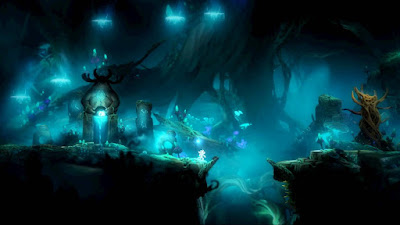
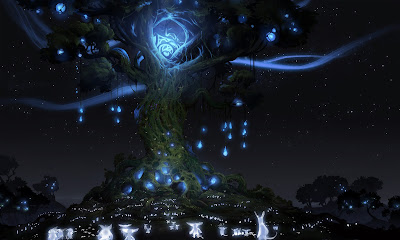
I've been playing Ori and the Blind Forest recently; and that game has in my opinion a very good depiction of what a "high fantasy" nature might look like. It should be noted that it isn't a chaotic, wild and untamed version of nature, but nature as a form of order. The "Spirit Tree" is the game world's God or central being, to which the life and plenty of nature relies on. Once the tree loses its light, nature begins to weaken. The corruption brought by Kuro's theft of the light is natural too, but represents a sick or corrupted form of nature- something like a fantasy blight or darklands.

If you play the game; various levels are made up of natural places and areas with high amounts of growth. Magical glowing plants provide both restoration to your life, jump pads, various folding/unfolding platforms, plants that shoot energy blasts, and so on. The locals have also used this energy to various effects, in the form of machines or laser beams that are used as weapons. One could consider this magitech, but these technologies exist because of the natural energy, and is not shown to be directly damaging to it; much of it is built by the Gumon or the race that Naru comes from- and they still live in caves despite building lasers. Even without these features, I'd like to imagine something like "spirit wells" still exist in the world; they are just concentrated points of natural energy.

Ori herself can absorb and use power- her primary source of energy is the "light" that is sourced from the great tree. Whenever she uses one of the shrines, she gains a new power- this power is always a physical ability or enhancement. The power to dash, double jump, climb walls, and so on. From this, we can say that the direct blessings and power of nature is all about improving the innate aspects of a creature- if a party explores or finds magical blessings or power sources in nature; it fits here more then a dusty stone dungeon built by humans to gain a permanent bonus to a stat or maximum health.

Another aspect of nature being magical or something aligned with order is the temples and dungeons that actually control the world. At the beginning of the game, the land of Nibel is shown to be in chaos because it is missing its three elements; the Waters, the Winds, and the Warmth. These elements are directly tied to physical places in the world; dungeons formed or built by nature itself. With the source of these elements corrupted or blocked off, the world itself is wrong and nature is corrupt. This is another high fantasyization of nature; rain is a magical entity that is caused by a specific thing, not the water cycle. If a tower that controlled the rains existed in your setting; people going up there to steal it away and gain control over all the kingdoms by controlling their rains and crops would be a high fantasy plot- something only possible in a world that operates under fantastical rules.

Wednesday, August 18, 2021

Women of Gerrstain + [Class] Squirrel Woman

Gerrstain is a fine, humble little country situated between two mountain ranges. The land is dotted with thick forests and mountainous hills; crags and canyons criss cross its body and make the place generally very rugged and hostile. There are few, if any, towns and villages. Instead, the people live in small huts or live on the side of the mountains. Most are fur trappers, some miners, many lumberjacks.

If you were to travel this land unaware; you would be surprised. Every single person you'd meet on the road would be a man or a child. There are no women, and no girls over the age of fourteen. The men are kind and hospitable, and always have room for guests with news from the outside world- they don't have much time to travel. You see, the menfolk here do the work and raise the children. They feed the young with milk from fat-teated hardy goats and build their houses halfway buried in the dirt. It helps keep in the heat but is more due to respect then anything- in Gerrstain, the men live on the ground, and the women in the trees.


The Women of Gerrstain
When a young woman blossoms into adulthood in this country, changes go through her. Changes that go through every young girl, of course, but here, it's different. The women begin to lose interest in things like pretty clothes, reading, work and play. They become more distant, keeping their hair long and unkempt. Eventually, they leave their father's houses and go far away to live in the woods. Every woman in Gerrstain lives in the trees.

You can catch a glimpse of one, sometimes. They all look the same; pale, naked female forms dancing and flowing between the branches of the thick canopy, each one with thick black hair that goes twice her height. It flows behind her like a black streaking comet, or a long tail. This is also why they are called the "Squirrel Women". They're all totally unwashed, unshaven, with long claws that grow to adapt them to nature. Their faces are even worse; like ghouls, but can be striking if you catch one in the moonlight. But it's best to take the local saying to heart; "Beautiful things are best appreciated at a distance".

They survive in those woods by hanging from the trees; they'll eat anything they can catch. Usually squirrels, rabbits, birds and a steady diet of the golden acorn. Sometimes other things wander through those woods, and sometimes you'll find their corpse, ripped half open with the heart pulled out and messily devoured. They never go bigger then a kobold, but its frightening just how close some people get to being the size of a kobold. Some find it hard to believe that these women are capable of such feats of acrobatics, despite how wild they be, but their hair moves as though it was a hand, and it is more then capable of supporting their weight- letting them sleep upside down like bats. More then one traveler has found something gone missing from their pack from a long black "snake" coming down from the trees above, grabbing something shiny, and then retreating away.

These women are also sorcerers. Since even girls who have never learned how to read will become one of them, and since the women of Gerrstain don't seem to socialize with each other at all, it is not well known where they learn these powers from. Perhaps it is something in the winds and the waters of this land, whispering the arcane secrets to those who are most respective. Some instead go by the more fanciful notion that these women are just using powers innate to all people- but only by living so close to the wild, true self can one bring it out.

Of course, this arrangement has to result in courtship at some point- and it does. Men in this country notice the change in the behavior of the Women at around mid fall; where they will creep closer to his cabin and home. They will watch him in the day, while he works, and at night will leave corpses of squirrels, twisted in half, or sometimes little stacks of three stones. Regardless of the gift, her consistency shows her interest. If the man is afraid of her, or if he has room for another child in his house, he will sneak out of his home one night without a weapon (suicidal in a monster infested country like this), and leave things up to nature. He will come home the same night; and during early to mid spring, a child may be left outside his door. There's no way to know if they are truly his, but the women in the trees are not flippant; they will never court a male that has just moved in to a place- and no unwanted child is left in those woods by accident- this is the only country on earth where leaving an unwanted child to die in the woods has a very low success rate. Any man who abandons a child given to him by a lady here will find the child returned to his home soon after and himself with one less finger once she's made the point clear.

Nobody sees the women in the Winter. That's because they're asleep. Travelers will be advised to never make camp underneath a wiry black beehive if they see one, high in the brambles, and especially don't try to knock it down. It's more convenient to explain it that way; as long as they don't disturb the women, it doesn't matter what they think.

[Class] Squirrel Women
HD-
d8
Max AC-
14 / Minimum Hit-Points-3

All Squirrel Women are very agile. Take whichever stat is the highest and swap it with your Dexterity, unless if your Dexterity is already the highest. Squirrel Women are incredible climbers regardless of their Dexterity. Like the Spider Climb spell is on at all times; or they can climb any tree, building, or stone face with zero difficulty. If a truly impossible thing must be climbed such as a wall of glass- assume they have the Climb Sheer Surfaces skill at the same rate / chance as a Thief twice their level.

Squirrel Women receive +1 to hit with all attacks at levels 4 and 8.

As a rule, the Squirrel Women do not wear clothes or armor, nor do they use weapons. Their claws and magic is all they truly rely on. If forced- Squirrel Women will wear clothes and make a very base effort to go around in civilized society- constantly pulling and itching and scratching and themselves in uncomfortable clothes and holding utensils and drinking cups all wrong- much preferring their fingers and hands. They can speak, but only barely, and cannot be taught to read or write.

All Squirrel Women have very long hair that is under their control. This is the first of their magic powers. Their hair is their greatest tool and asset, and is prehensile. They can use their hair like a third arm, but its as long as they are and much stronger then a normal human arm. It can hold up their entire body weight, for example. Their hair can be used as a weapon at 1d6 damage, counting as magic damage at 3rd level and higher, and dealing 1d8 damage at 6th level. If their hair gets wet, they temporarily cannot use it.

Additionally; every Squirrel Woman is gifted in the arts of magic. At levels 1, 2, 5, 7, and 9- roll on the spell table below and add that spell to the Squirrel Woman's arsenal. They can cast each spell once per day. They can teach it to someone else only through doing, as they can't read or write. The Squirrel Women can also learn standard magic user spells too- but once again, it must be taught to them, it cannot be learned from scrolls or spellbooks. For all spells besides their own, they cast them as though they were one level lower from being amateurish spellcasters.

Finally; the Squirrel Women are tied closely to the powers of nature and are wild, untamed creatures of the forests. If they ever willingly take a bath, or are forced to take one by someone else, they are drained of one level. Note that jumping into a river or fighting sharks in the ocean doesn't count as a bath, but bathing in a hot spring or noble's bathroom with soap and bubbles and all that does.

At 10th level, Squirrel Women become Tree Matrons. Older and stronger then the others; these Squirrel Women can grow in size with no loss of dexterity, and gain considerable strength. Your strength grows to a supernatural level (+3 modifier) and you may roll on the Squirrel Women spell table every winter when you hibernate- when you wake up, you learn the new spell until you've learned all of them. 

You also become a defender of a large swathe of Gerristan forest- your territory has many juvenile Squirrel Women who will aide you in daring raids on the camps of invading orcs or to put down rampaging monsters, etc. These gatherings are always temporary, can only be done once per season, and draw 2d6 Squirrel Women of 1d6 HD / level to you for a single night.

Squirrel Women Spell Table - Roll d10
[1] Beetle Carry
Summons forth a carpet of beetles that arrive in 1 turn. The beetles pack closely together and flow like a small river. They will pick up and carry any object laying on top of the soil, or gently placed on it. If anyone steps into the beetle stream quickly or throws an object among them, they'll disperse around it like a stone in a stream. Using this, it is possible to divert but not steer the great stream.

The beetles move in the direction indicated by the squirrel woman when summonsed, and will continue their march for about three hours. They can carry a nigh-infinite amount of smaller or more medium sized items, but very heavy things like boulders won't be moved at all. The beetles march and carry stuff at about a medium speed walking pace.

[2] Extinguish
Puts out fires that are pointed at or motioned towards with the caster's hands. This spell can snuff out a small angry mob's worth of torches, a large campfire, or a volley of burning arrows in flight. Causes a save or die effect in a number of Fire Elemental worth of HD equal to the caster's level or less. These HD could be from multiple elementals, or one big one. If the HD of the elemental is over the casters level, this spell cannot extinguish their flames.

[3] Turn to Wood
This spell temporarily transforms the caster into wood, either partially or wholly. If the caster level is 1 to 3, it is only a partial transformation covering 50%/75%/90% of the body respectively. If the caster is any higher level then this, the transformation goes over the whole body.

While wood, movement is slower and more difficult, but no loss of climbing ability- sneak is negatively effected because you squeak. But if you stand still, you blend in perfectly with foliage and trees at a distance.

Additionally, you gain +4 AC while made of wood. Using this spell is how most of the Squirrel Women (who don't wear armor, remember) reach their maximum AC value while in combat. While in wood form, you become flammable and take double damage from fire.

[4] Mushroom Husband
This spell requires a tall, flowering mushroom to be the focus for the casting. Upon being cast, the mushroom rapidly grows into the height and shape of a man, become a bipedal mushroom person. The mushroom person is bound to the will of the Squirrel Woman who summoned it. It has a limited, thought still nearly-person level of intelligence. Some people claim that they see a resemblance in the faces of the Mushroom Husbands in that they look like the men the Squirrel Women fancied and who have since died, but this is probably pure superstition from the outsiders of Gerrstain.

The Mushroom Husband is physically weak and slow, but very hardy. If it is chopped apart it will reform in one exploration turn from feeding off nearby decay and plant matter. It can only make attacks by succeeding on a saving throw vs spells (using the Squirrel Woman's modifiers / chance) and on failure cannot attack or fight back for the duration of a combat. The Mushroom Husband can attack with squishy fists, dealing 1d3 improvised damage.

Additionally, whenever the mushroom man is killed or hit with a blunt weapon, it releases spores. If within reach weapon range (spear, whip, etc) you take 1d2 damage. Because of this, the Mushroom Husband can be used like a walking scout or deterrent which can be used over and over again to follow someone. If the Mushroom Husband's body is burnt or killed by a fire attack, it won't reform. The Mushroom Husband lasts for 3 days before shriveling away into dust.

[5] Cursing Howl
The caster lets out a fearsome, bone-chilling howl. Anyone who hears the howl is cursed if they do not immediately begin to leave the place where the caster considers home. For the Squirrel Women, this is the entire Gerrstain forested region, since the whole land is their home. Those who consider the same place home are immune to this spell.

If those who hear the howl and do not immediately begin to leave the area, they suffer the curse. The next time they fail a saving throw, increase the damage by +1d6 they take, if damage is taken. If no damage is taken, increase the magnitude by a similar amount. Every time they fail a saving throw, the caster of this spell can get a general sense of where they are. More howls ensure a deeper curse.

[6] Isolated Wood
This spell is cast on a forest glade. If there is a dryad within a tree nearby, the dryad will become this glade's guardian. The area of this spell is roughly equal to a few minutes of brisk walking through woodland, or a large tangle of trees separated by grasslands/rocky mountains around them.

The Isolated Wood becomes a magically enchanted place. It's like a sanctuary; it becomes quiet, with no birds or loud animals to inhabitant it. The place becomes a sanctuary for the spell caster- while they are within the Isolated Wood, they can sleep safely (they are awoken if something approaches), and once per day they can cast a magic spell as though they were one level higher. They can also send their whispers out- their whispers travel like on the wings of a bird. They can whisper on a high tree branch towards somebody below and they will hear it as though it was right in their ear.

The Isolated Wood effect ends if the wood is destroyed- a forest fire being used to flush out a forest witch is not an uncommon occurrence on the borderlands.

[7] Ivy Boots
The caster grows a pair of boots made of ivy around their feet. These boots are made of plant material and are rather light, meaning they don't grant any protection from tiny biting rats or caltrops, but they have the specific effect of granting improved movement through brush and making the user immune to the slowing effect of Entangle.

Secondly; the boots grant a bonus to stealth. The stealth bonus is equal to how heavily forested or how rich in plant life the place where they step is. On stone floors or raw dirt, the effect is minor. In lightly wooded areas or on grass, it is greater. In heavy brush or while moving through tall grass the effect is very powerful and makes each step totally silent. Grant the caster the Thief Skill of Move Silently at 20%/60%/100% respectively OR just use a ruling that they cannot be heard.

[8] Talisman
To cast this spell, the caster must create a talisman out of materials gathered and crafted by themselves. It can be of any design, but is to be worn around the neck. When this talisman is being forged, the caster must imbue within it a single curse or spell that is to activate if the talisman is destroyed, disrespected, or removed without permission from the wearer. The talisman is then presented to the target (either by force or chosen willingly) to be worn- the target of the spell will always know that the talisman is magical and taking it on is a serious thing, though they won't necessarily know why. 

The first person who wears the talisman is now under its spell; anyone wearing a talisman crafted by you can be felt at quite a distance, a general idea of what is happening to them and where they are, as well as the muffled sounds of speech or blurry sights of things that can be "seen" out of the talisman, as though it be one astigmatic eye. Covering up the talisman such as hiding it in a shirt, or bundling it under heavy clothes are some ways of limiting the caster's watchful eye.

The Women of Gerrstain hang talismans on the doors of men they fancy, usually after offering several shredded birds or skinned lizards. This is considered a form of marriage, and any man wearing a talisman is off limits to any other Squirrel Woman. At the same time, the man wearing this talisman must go about their life knowing that removing it will mean whatever curse the squirrel women has put on it will befall them; and since they will know if the talisman is destroyed or removed it will probably make her very angry as well.

[9] Brush Bandages
Requires handfuls of plant matter from a woodland or forest. These plants are then wrapped around wounds and injuries with a special spell; this requires at least two turns to cast. This spells heals 3d6 Hit Points and temporarily reduces Dexterity by the same value as the body stiffens and is infested with weeds and growths. You cannot die from this loss even if it drops Dexterity to zero or less; instead you become a tree for that duration.

Every turn, the bandages are absorbed by the body and increase Dexterity by 1 until fully restored.

[10] Devil Dreaming
This spell only works on sleeping targets. Those who are asleep have this spell magically cast on them while the caster must stare at their sleeping body; in turn, the sleeper begins to have a nightmare. The nightmare will be unqiue to the sleeper, and the caster of this spell has no control over it, but the result will be a sleepness night with poor rest. Multiple nights of this spell being cast on someone can greatly reduce their health and well being, though it requires a fresh casting each night. At 3rd level, the caster may not influence the dreams of the sleeper, letting them control exactly what they see, or even sending them messages amidst the nightmare.

Additionally, if the caster of this spell is at least 5th level or higher, the spell has an additional effect. The spell-caster may form a dark spirit from the energies and fear released by the sleeper under the effect of this spell. Their nightmares made manifest. Each night this spell is cast on them, roll a 1d6 with a bonus of +1 for each great fear or phobia the caster knows about the sleeper, which are subconsciously added to the dreams of the sleeper to further harry them. Once this number reaches the victim's Wisdom score or greater; these nightmares soldify into a lesser dream devil. (As imp; 1 HD, 1d3 claws, casts spells, etc.) From then on, the dream devil can torment people in their dreams and if they fail a save, they have a level drained, while the dream devil gains +1 HD and can become a more powerful form of evil. If the devil is slain, or the person finally has good dreams, such as from sleeping in a church, the lost levels and HD are returned to normal. 

If the victim is eventually killed by this creature or commits suicide because of it, it becomes a permanent minion under the control of the caster with its HD and powers it has upon the victim's death, stealing all it can from their pathos. While under the caster's control, it will always be Chaotic Evil and refuse to obey command to those who are not constantly looking for or give the devil opportunities to hurt more people.

The Squirrel Women use this spell to punish and harass those who enter their lands or men who displease them; but rarely become powerful or sadistic enough to create dream devils. This has, in turn, become the domain of evil wizards who have taken the traditions of witchcraft from these lands and turned them to their own ends.