Showing posts with label animation. Show all posts

Tuesday, August 15, 2023

Hylics is Post-Apocalypse Cuphead

Yes, you read that title correctly. I'm going to be assuming that anyone reading this is familiar with both Cuphead and Hylics 1 and/or Hylics 2. Both are great indie games made by small teams with a unique artstyle and really good music. Both are an homage to classic game genres- Run & Gun Shooters or Oldschool "Four dudes in a line" turn based JRPGs. But the similarities end there- or so you thought.

Naturally, this will spoil major "plot" elements for both games. You have been warned. I should also mention that I have not watched the Cuphead show, nor do I have any plans to, so this blogpost will not contain spoilers for that and if there is any "lore" from there I missed then you can consider it non-canon for the purposes of this nonsense.

The Evidence
Both worlds have a fixation on gloves. Cuphead is a cartoon, and classic cartoon characters are known for their big white poofy gloves. Hylics takes the glove-love to a whole new level with gestural combat- gloves are one of your primary equipment slots. It's never in the direct spotlight, but gloves and hands are very important to the theming of both worlds.

Both worlds have magic. Magic isn't exactly uncommon in fantasy, cartoon, or sci-fi universes, but there is something specific about Cuphead and Hylics magic systems; both feature on a liquid-like resource for the main character's specific abilities. In Cuphead, Cuphead and Mugman drink "potions" which seems to be the source of their powers in the form of their "shots", similar to spells or energy-based attacks. Hylics uses juice as a recovery item for your will points, but you always have access to every gesture you've learned. While Cuphead and Mugman simply "equip" their shots, it isn't unthinkable that "in universe" they are drinking the potions before a boss fight to regain their energy for that specific type of shot they are performing. They also aren't pure video game abstractions, because they are actually bought and sold in universe by Porkrind the shopkeeper.

The characters of both worlds are also very diverse; composed of humans, talking animals, robots, and inanimate objects. Cuphead has a cast that is much more recognizable on what or who they are; dragons and genies and a giant evil flower. The main cast of Hylics is composed of a moon-man, a bug dude, a fish-bug-maybe robot dude, and a girl who casts spells. Hylics enemies are even weirder but include giant ghost-like invincible skulls, cultists, fish who swim through the air, weird animals, and a guy driving a car (found in an underground dungeon by the way). While thematically very different, the sort of "anything could be a person" feel of a classic cartoon is preserved in Hylics's bizarre roaster of enemies and NPCs.

You know what's not bizarre about Hylics? The food. Your consumable items are all food items- very generic and very western. Burritos, cookies, juice, bananas, and so on. While many games have sort of generic food with healing and/or recovery effects- It's important to note that Cuphead also has magic food in its world; the "Wondertart" being an important plot point in the DLC. Powerful "magic" food like bananas and cupcakes in the Hylics world.


One of the more underground fan theories about Hylics regards the Sages. The Sages are three powerful or wise beings that give Wayne & Crew the "Sage Tokens" needed to unlock the ultimate gesture in each game. Interestingly, each Sage has a name and the Sages are different in both Hylics games. In Hylics one, they are the Sage of Brains, the Sage of Computers, and the Sage of Death. In Hylics 2, they are Sage of Monitors, the Sage of Accretions, and the Sage of Satellites. The interesting fan theory is this; the Sages change between games because the Sages always represent something very important to the game world; the Sage of Death being tied to the afterlife, which is how players gain more maximum HP, or the Sage of Computers being how players learn new gestures (by looking at monitors). What does this have to do with Cuphead? Well- Cuphead doesn't have Sages, but there is a strange parity between the three "super moves" that you learn by clearing the mausoleums in the game, with each one sort of representing a core aspect of the game; the Super moves including a laser (projectiles), invincibility (avoiding damage), and ghost form (with a pink heart- representing parrying/using your own body as a weapon). This one's a bit of a stretch but it feels a bit too synchronous not to include. 

Both settings also have an afterlife- with death being a temporary and often reversible thing. Cuphead has permanent death (Ms.Chalice) of which her mission in the DLC is to find a way back, and temporary "battle" death, such as characters exploding or getting turned into food but being fine again in the outro- once again it's cartoon logic. In Hylics, the afterlife is a place you travel to every time you die and return to, and in Hylics 2 it is also the fast travel location. While the Astral Realm is mostly shown as an outer space or abstract realm; the Afterlife in Hylics is very pink- the same color as the "hearts" of beings in Cuphead. Cuphead, Mugman, and Ms.Chalice all turn into ghosts when they run out of health but you can parry their heart since it's pink to bring them back before they float off screen in co-op. It's not a perfect match... just yet.

The Proposed Timeline
Cuphead is a cartoon world, with a timeline and aesthetics that hint at a place in time. It has a history of its own; shown in the statues and background "lore" of Ms.Chalice, a playable character in the DLC and a useful NPC in the base game. Ms.Chalice is a long dead ghost that appears to be of the same "race" as Cuphead, Mugman, and Elder Kettle- basically a living cup. These chalice people are depicted as wearing togas and holding swords, spears, and shields- indicating they are an ancient culture. The Cuphead of the current time is early 1920s and 30s Americana, which is a given as this is the time period that the cartoons the game is based on were made. Contemporary by their standards then, now a vision of an unreal past.

As for Hylics, it has no defined time- However, we can infer a general time period from elements in the game; everything from the fabled water cooler, color televisions, and even a "Sage of Computers" all indicates a fairly modern time period- a 90s to 00s morass (obviously, as a fictional world, actual real world timeframes are irrelevant; but it follows a general progression as a secondary alternate "real world".) As for the game itself- it has a timeline and "lore" from the events of Hylics 1 to 2, which even includes at least one if not more apocalyptic events that destroy and recreate the world. The most notable of which is the Accretion- the events of Hylics which directly tie into Hylics 2.

So what great event could possibly bridge the gap between these two eras, exactly? What else? The war. The bomb. Let me explain.

Cuphead isn't the real world. It isn't based on a real time or place; but it has the markings of an era. It's animation style is unmistakable- rubberhose. It's the character of the 1930s and great depression era animation. But Cuphead does have a defined story. Somewhere during the events of Cuphead or immediately after are the events of the Delicious Last Course- Cuphead's one and only DLC (at the time of writing this). And the final battle of this- and the final battle of Cuphead- you fight Mr. Saltbaker. It's a great fight- and the only Cuphead boss animated on ones instead of twos, giving it a really surreal feeling and a great send off for the game. Saltbaker's animation is really good, by the way, not just hamming it up for this shitpost. If you haven't played Cuphead, it's pretty good.


But I mean, honestly, just look at it. This isn't rubberhose 30s animation anymore. This is Golden Age animation. This is just straight up Pinocchio- the 1940s cartoon. Things are changing in the Cuphead world. There is no set timeline or history, but things are progressing. We are leaving the old, nostalgic era, with all its film grain fuzz, and we are entering the second world war. The simple moralist views of the past, what with the Devil tricking people, is quietly going to fade away as the horrors of the modern world change things. The bomb. Modern thinking, and then, the Postmodern. This is the inevitable fate of Cuphead's world.

The descendants of this cartoon world interbred with each other. While the creatures of Hylics are only vaguely based on real life creatures, for the most part, they have common traits with real world creatures that are cartoonized. Dedusmuln is basically a bug. Wayne is a crescent moon- the sun is a living thing in Cuphead, as in many cartoons- and you actually fight the Moon as a boss in Cuphead. (Though she's really a Zeppelin.) It's not unthinkable that, many years after the initial war and ideological paradigm shift that broke the Cuphead world apart, the descendants in the trippy wasteland of color and imagination would warp into Hylics enemies and beings. They make plenty of logical sense- their designs are exaggerating and 'toonized versions of beings that don't exist. The gags of Hylics are intended for an audience of another world, not ours. Ironic layers of subverted meaning- perfectly postmodern.

There's a lot of thematic similarities between the two works as well. Both are cartoonish. Hylics is almost a spoof of JRPGs storylines with slapstick humor thrown in the mix. You fight a weasel summoner, find a warm burrito in the toilet, and pester a guard until he gives up. Everything is being controlled by Dracula. It's wacky and zany and you're not supposed to take it too serious. Hylics 2 actually tries to have a plot, but past its layer of weirdness its actually very simple. Hylics 2 is also much less random for the sake of it and has a bit less humor- but the humor more comes from the writing and funny situations. Both Hylics games are relatively upbeat- which to me fits well with the cartoon world of Cuphead. Most people assume that a post-apocalypse has to be grim, dark, and hopeless- but that's not necessarily the case. If you start with a colorful cartoon world, and blow it to pieces, it doesn't suddenly turn gray.


Physicality & The Gnostic Connection
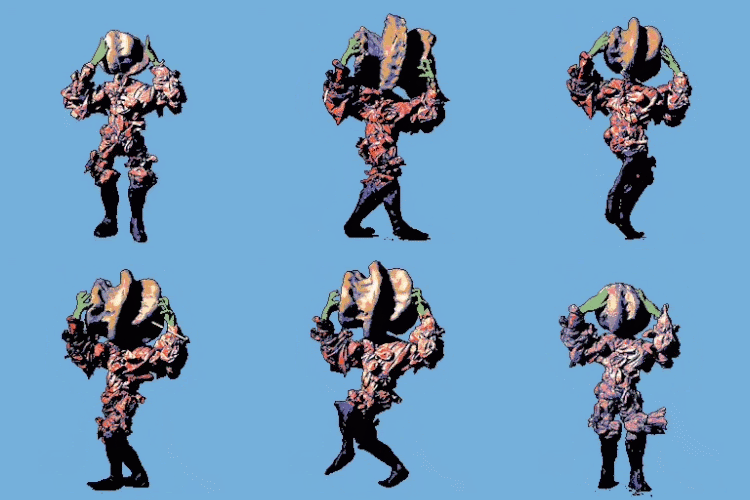
On a more meta-level, both worlds have a surprisingly similar origin. Both are made by artistic minds who greatly value authenticity. For Hylics, Mason Lindroth makes almost everything out of clay. Even Hylics 2 and the teased "next Hylics game", which day make use of 3d animation and graphics, are still fundamentally based on clay sculpting- the models and props used by Mason's own hands and digitized to be used in a game world. The animations of the spells and attacks are Mason's own hands, turned into animations for use of the various gestures. Everything about it is based on a level of physical creation- literally sculpting the game's world, enemies, and designs by hand as clay.

Cuphead is very similar. For those unfamiliar with its development; one of the reasons why Cuphead took so long to make (and the DLC took 5 fucking years) is because everything in Cuphead is hand animated. You may not even notice it in the game, but every single boss, asset, animation, and level in Cuphead was created on paper- though the development team took some shortcuts with allowing these assets to be digitally colored, this was only to reduce the already insane workload and level of dedication required to fulfill this project. The purpose of this was to add the tiny mistakes, the effects of ink and pen on paper, and the imperceptible human element to the entire project. Now if this was actually worth the effort they went to for the project, that's a discussion for a different time, but it is unarguable that this elevates Cuphead above another project for the sheer level of craft alone.

Now obviously, there is a massive difference in the scope and budget of the projects. Hylics was a small RPG maker game that was never meant to be a serious indie project to compete on the video game market, where as Cuphead was a successful Kickstarter with massive praise and mainstream attention. But I find it fascinating how both projects have such similar underlying themes. Weirdly enough- this is even present in their gameplay, despite them being radically different and almost complete genre opposites. Cuphead's creators made the game to combine their love of classic cartoons and oldschool NES style sidescrollers like Contra and Mega-Man- games focused on fast action and platforming. This would make it totally at-odds with Hylics turn based, tactical battles with chill music and party-based combat with an emphasis on teamwork.

But the important thing here is the context of these challenges. While both games have radically different game design structures- one thing is carried throughout both works. When you're in a battle, or a Cuphead stage, or whatever else- your abilities and capabilities are not determined by your characters level or power-ups, but moreso by your own skill as the player. Hylics is based on JRPG tropes and mechanics, made in RPG maker, but you never actually level up. There is no direct increase in stats based on your progress through the game. Instead, you only get stronger by either adding new party members, interacting with certain items, or finding new gear or consumable items which can help carry you through harder fights. Cuphead is the same- you can switch loadouts of weapons or charms to make certain fights easier, but these are all side-grades or fitting for different situations. There is no straight up "better" upgrade or weapon in Cuphead, just more options.

Now you may be saying "hold on, Cuphead is a sidescrolling, boss-rush shooter. It has literally nothing to do with RPG mechanics! That entire genre is like that!" and you are 100% correct. This is purely a reach. But, if I may interject, consider the time period and development of this game. I am not a game developer, but games take a very long time to make and much of that development time comes with changing ideas, priorities, and the different market-realities of the time. Do you really think, throughout its entire long and storied development, that the Cuphead developers didn't once stop to consider the possibility of changing the game's genre to something more popular at the time? This game came out in 2017 originally- during the current peak of the indie Roguelike phase. While I'm glad the original vision of sticking with a cartoon retro-style shooter game was kept, I think it's foolish to believe that the Cuphead developers never at least considered the possibility of giving their game more mass market appeal. Something with permanent player progression, exploration of a larger world with content spread thinner throughout, or just an easier and less challenging game overall.

This underlying concept of not having level-ups or out-of-character forms of progression directly tie into the underlying themes that both games have- this kinda-sorta everyman fighting against greater cosmic forces them themselves. Neither Cuphead or Hylics really have a bombastic or overly complicated plot- you aren't a chosen one or something special. There is a great degree of physicality to both their designs- with Cuphead being a literal Cup, and object of no consequence that most people use every single day, to Wayne being a very simple shape to make with clay- a simple moon. Cuphead's plot is literally about freeing people from enslavement by a spiritual entity- Hylics has this idea much more strongly however- with the Gnostic terminology sprinkled throughout- though this is mostly set dressing. There is a blind-idiot God currently controlling the world, but he isn't the Demiurge. There is a Pneumatophore, but you just use it to air-dash and get around the game world. It's not meant to be an exploration of a spiritual belief predicated on existentialism. It's just weird, trippy, short experience- and that's all it has to be.

So in conclusion- Do I think Hylics is a Gnostic video game? Not really, and neither is Cuphead. But it cannot be just a coincidence that one of the only RPGs where you never level up just so happens to be named Hylics.

Monday, August 2, 2021

Dragon's Lair is a pretty cool dungeon

Dragon's Lair was an arcade game which made use of full cartoon animation where the player was required to make inputs at the right time to overcome multiple obstacles. It's most notable for being a classic arcade game that doesn't use pixel graphics, having art and animation by Don Bluth, and being very fantasy inspired. I'm assuming this game had quite a bit of D&D inspiration, considering that it came out in 1983, but that was a decade before I was even born, so who knows.

The game itself is a bit of an obscure relic, but since its basically just a cartoon with button prompts you can watch the whole thing on Youtube. Watching it now, you can still enjoy the charming animations and all the death scenes, which are pretty fun. (There's a lot).

However, why am I telling you this? Because the actual dungeon presenting in Dragons' Lair is pretty cool. I decided to stat it up a bit.


Purple Eyestalk Water Monster
(3 HD, +3 to hit, constriction)
This monsters lives in water, and attacks prey above. It sees through green eyeballs at the end of each of its many eyestalks- which double as its tentacles. It doesn't attack except through dragging prey underwater. For each "hit", count it as having wrapped a tentacle around you, which gives you a -1 to your Strength modifier for all rolls or challenges to break free.


Drink Me
The infamous magic potion. It doesn't do anything cool like shrink you down, Dirk just like flashes green when he drinks it and explodes into dust. Kinda lame. Still- cursed magic potion, drink it is an instant death. Perhaps you could interpret the sign as a sort of magical persuasion- save to avoid drinking the deathly potion.


Snake (
Stats as Giant Snake)
While generic giant snakes are nothing new, I would like to say I like the coloration here. They seem to be a combination of the very venomous coral snake (red touch yellow) and the nonvenemous scarlet king snake (red touch black) based on its coloration; but they only kill Dirk by constriction in the death scene. I also like how they come out of the bricks to attack; that's a fun combat element to spice up an otherwise unremarkable encounter.


Slime Claptrap
(2+1 HD, Big-Bite at 1d8, trapping tongue, surprise)
This creature can appear from slime or ooze that is spilled or found in a random room or area. As such, it's body is very misleading. The claptrap opens its mouth very wide when it appears, also making it hard to tell exactly if something is about to attack you when it does appear. For both these reasons, you must roll for surprise whenever you encounter it.

The claptrap's mouth is very big and can slam down with great force; but it's slow. You can step away or attack its body before it can slam shut. In order to help it trap prey, it has a prehensile, sticky tongue that requires a save to avoid- if the tongue hits you you can't move back and must attack or be eaten by the creature. But because this creature is made of slime, it can be broken apart in a single strong attack; any blow that deals 6 damage or more knocks the creature back into slime.


Big Yellow Smoke-Electric Monster
(3 HD, +2 To-Hit, casts Shocking Grasp to attack, smoke)
This monster is made of smoke and seems electrically charged. It attacks by using Shocking Grasp, which is an at-will ability it possesses. Technically Dirk kills this in a single hit, but he does that for everything and when he "defeats" it in Dragon's Lair it actually just shoves it back into the cauldron it came from with the heavy metal lid back on; perhaps this monster is quite a bit tougher but can be locked away back in its cauldron by covering it. Good puzzle-monster.


Hazards
I don't want to try to create stats or anything for these, since there are a lot of them. Some interesting ideas here though- the castle crumbles behind Dirk as he explores. Now in an actual game, exploring a dungeon that is slowly falling apart is a fun idea, but probably should be on the timescale or days, or at the very least hours, as to give the party plenty of time to react and send out expeditions.

One example in particular I do like from Dragon's Lair is the boat section, which includes "Ye Boulders, Ye Rapids, and Ye Whirlpools". I like the idea of a boat or paddling based saving throw you might have to make in a game, probably just a generic saving throw by modified by Strength. I think this is fun because the vast majority of "movement" related checks or evasion is based on Dexteirty, but in this case it's how hard you can paddle.


Giant Balls
This trap are several large perpetual motion machines along a long U shaped corridor. When someone enters one side, they will be chased by a giant black ball. The balls have to be run past at the right time, but fast enough to avoid getting crushed by the giant black ball. This would probably be a simple saving throw, or a dexterity challenge. Perhaps any character could accomplish it- unless if they're over encumbered. I'd say getting crushed by the giant ball is a sure death, but these small balls just deal significant damage but knock you to the floor which makes it harder to escape from the large ball.


Spinning Sticks + Spike-Pit Trap
These are pretty simple. Just sticks that spin around and knock you into pit traps. In Dragon's Lair its a matter of timing, I like to think that in a tabletop game you could replicate this by giving the player a choice- they can rush through and get a hard save, wait a round to watch the pattern and get an easier save, or wait 2 turns and/or be unencumbered to not have to save at all. Having them be pelted by ranged enemies and spells during this time would make it much more interesting. If you fall in you'd probably just die as by OSR styling, or take like 4d6 or something big like that.

Much more interesting then the trap itself is the enemy at the end of it.


Red Death
(4+2 HD, +2 To-Hit & AC, Undead, Scythe of Disintegration 1d8+2, Flying, Enchanted)
The Red Death is a wraith. While it is clearly a ghostly spirit it isn't ethereal (because Dirk can hit it with his normal sword), but it's floating around and stuff, so I'd say its "body" is probably its signature red cloak.

Also, this creature uses a magic Scythe that destroys Dirk in one hit. Dirk dies to everything in one hit in this game, so I'd imagine is probably first level and has 1 Hit Point (unlucky roll on his first hit die, probably!) I'd say this Scythe is a minor +2 magic weapon; capable of killing any creature it hits in a single hit if that creature has 2 HD or less; otherwise, it just deals 1d8+2 damage. Additionally, when this creature is slain, it advances the Black Briars enchantment one stage.


Black Briars
It's not easy to tell if these are related to the Red Death creature in some way, or perhaps just a dungeon trap or hazard. I like to think that the Red Death is its own entity but has been enchanted in some way to control the black briars that make up the pits in its chamber.

When Dirk enters they appear simply as spike pits, but once he crosses the gap from the spinning sticks they start to close in behind him. I like to think this is some kind of enchantment spell that is somehow combined with or controlled by the Red Death. Perhaps the dungeon's creator wanted the black briars as a pit trap as they are inescapable once you fall in, coiling around anyone who touches them, but if not controlled they would quickly spread through the whole dungeon and try to strangle everything.

The Black Briars become more animate and aggressive the longer a victim is around them. They start at the first stage and advance one stage every combat round, unless a creature nearby is containing them. Slaying the creature releases the control.

First Stage: The Briars are dormant.
Second Stage: Briars move lazily towards any living thing. Can be jumped over or slashed, but you must make a save to do so during combat.
Third Stage: The Briars gain some amount of intelligence and will move to cut off escape routes. They move faster, you must now sacrifice a turn to avoid.
Fourth Stage: The Briars now make attacks every round, at +1, counting as magic. On a hit, you are entangled and are slowly squeezed and fed upon; 2d6 damage per round until death.


Enchanted Workshop
The workshop is enchanted and has several animate objects (weapons, anvil, statue) that attack Dirk. Not really much to say here- except for the glowing green fire. At a certain point, Dirk goes to it and puts his sword in it, gaining a flaming sword for a short fight with the animate statue. I like the idea of immersing mundane weapons in dungeon elements like this to make them magical or gain an extra power for an attack/few rounds/turns. Also the fire square on the ground is cool too, preventing you from moving, but not much to say about it either.


Whirlwind Room
You're introduced to this room by a whirlwind, which sucks you inside of it. Then within the room, there is a tornado inside with random objects. There isn't many mechanics, here, the only noticeable thing here is the glowing diamond which is a trap. Perhaps the diamond itself is a cursed item that creates the wind.

Stone of Storms - Cursed Treasure
This large gemstone is worth a fortune- at least 30,000c to a standard buyer, and closer to 40,000c for a wise man who recognizes its unique properties. However, it is cursed and there is significant risk to acquiring the gemstone.

The gemstone creates storms around itself, controlling the element of air. Air-based magical spells fail around it and gas or dust is blown apart easily. These storms become more dangerous the larger an area the gem is exposed to- if left outside it will quickly create an endless tornado, with itself in the center of its eye, rooted to one spot. Indoors, or in a bag or chest, the air only swirls around mildly- but even in a small room it causes objects to fly and tumble around. In a room with furniture or weapons, save or be struck by the flying objects. Your movement is halved.

The gem within this dungeon is particular is set in a trap- the recess it is set in has an opening in the floor that will fling whoever tries to reach for it out into a great pit, falling to their death. Similar tricks can be used by those who wish to keep the gemstone from thieves.


Flying Steed
The Flying Steed is a magitech construct of a horse. It levitates through the air once activated. It is not alive and therefore cannot be killed; stats as a warhorse but can only be stropped by true destruction. It can also fly and is very fast, never tires out or drops a rider out of fear, etc.

However, it is also extremely hard to control, bucking and flying wildly through the air. At the speed it travels, it can easily dash its rider against a wall or even the ground. Only a Cavalier of 6th level or higher, or a Fighter of 9th level, can control the horse enough to slow it down, dismount normally, etc. Otherwise its practical a rocket.

If you're riding the steed and are unable to control it, you are safe in a straight line. Make a saving throw to avoid smashing into something if you need to turn, stop, or get off the horse. On failure, you are flung at breakneck speeds and are killed or take serious injury; depending on where you crash.


Cool Electric Black-Knight Dude
(3 HD, +4 AC, +2 To-Hit, 1d6+1 Magic Sword, Electric Hazards at a range)
This guy fucks. By stabbing the ground, he can create electric fields that move away from him slowly. These fields deal 2d6 lightning damage to anyone who steps on them, but can be avoided by careful and slow movement. For each round you move towards him, you must either move at 1/3rd of your normal speed or make a save to run without getting shocked. If your character has -1 Agility modifier or worse, you cannot make the jumps required to accomplish this.


Various Undeads
There are several varieties of undead that inhabit this place; from tiny giggling skulls to huge skeletal hands to invisible wraiths that appear before attacking. All of them can be harmed by Dirks sword so we assume they are all some manner of corporeal undead. Isn't much to say for these; other then the skull shape. It could just be artistic license, but the protruding jaws of the skulls give a distinctly monkey-ish impression, as though these are the remnants of some other alien fantasy race that once lived or built the ruins atop the Dragon's Lair.

However I want to make special attention to these wraiths. Their method of killing Dirk in this scene is grabbing him and burying him alive in one of the heavy stone sarcophagi around the room- quite brutal.


Bat Lord
(1+2 HD, +1 To-Hit, 1d4+1 bite, bat swarm)
Seemingly connected to or in control of a swarm of bats that try to knock Dirk into pits, this roughly man-sized creature has a loud roar. It may also be a vampire bate, given how it wraps Dirk up while biting him for its death scene.


Magnetic Urn
While not a literal creature, the magnetic urn seems to be a magical or cursed item that inhabits this dungeon. It is filled with golden coins and runs away from the hero- but it also magnetically attracts his sword to it, leaving him briefly defenseless. Interestingly, it isn't clear if the urn itself is magnetic and that explains how it flies around, or if its magnetic ability is an additional thing that helps it disarm invaders to the dungeon.

For this; if you try to make an attack roll while it is adjacent to you with any ferrous metallic weapon (most metal weapons), then make a save or it slips from your hand. Even if you succeed the save, you'll still miss your attack from the strong attractive force.


Lizard King
(2+1 HD, -1 To-Hit, +1 AC, 1d6 Scepter Attack)
It's interesting that a creature like this got so much screentime- he doesn't have any magic or special abilities, or is really that threatening to an adventurer, but yet you have to avoid him for a long time while Dirk doesn't have his sword; and he attacks merely by slamming his scepter at you, while giggling. I like his design quite a bit. I also found that picture by searching online his name, instead of just taking a picture from a youtube longplay like I did for the rest of these. It's quite a nice piece.

Even though Dragon's Lair is just a QTE movie-game, Dirk fills up his little backpack with gold from that magnetic urn after beating the Lizard King, which feels like a very OSR/DnD thing to do. I could almost see it as a checkpoint or time when the hero could leave the dungeon with his mission unaccomplished in case he was too wounded or out of torches and the like to keep exploring. It feels very similar to defeating an important monster in a dungeon and then looting their lair afterwards.


Magnetic Crystal Ball

Yet another magnetic & electrical trap. This time, it has the strength to drag in both Dirk's helmet and sword, and begins to fill the room with electrical energy; moving as a zone on the ground that fills up the room. The eye on the top of the throne also fires out electrical energy, perhaps as a method to finish off anyone who just flies over the zone on the floor. I also really like the aesthetics of this room; I'd pay for an animation cel of that background by itself.

For this hazard; a simply saving throw is needed to avoid the trap, with the eye performing an attack roll at +2 against anything that simply levitates over the floor.


Magma Hulks
(Stats as Troll- Immune to Fire but no regeneration)
These large creatures are born from the primordial lava and bubbling underground sludge deep underneath the castle dungeon. They are born in an environment filled with fire, so are immune to it, and are big and strong. I'd stat them as slightly modified trolls to keep it simple.


Black Knight
(6 HD, +6 AC, +4 To-Hit, 1d6+1 Magic Sword, some spells)
This black knight is a powerful warrior and combatant and also appears to be able to cast some magical spells as well. He seals up Dirk's sword at the beginning of his fight, indicating this magical ability. If you were into more modern D&D edition, I would even argue this guy has Cackle- making his curse last longer each combat round with a laugh as he rides in.


Dragon's Lair
You're in the home stretch. This is the Dragon's Lair itself. It's a large cavernous room with treasure everywhere; the treasure itself is the only real threat here- as if it cascades and makes noise it will wake up the dragon. This is also where the Princess is held; potentially any captive or important NPC could be held there, but in this game it's Princess Daphne. This sphere is inescapable and requires a key to be unlocked. This is also the location of a Magic Sword.


Magic Sword

This is a generic magic sword. It doesn't shoot energy blasts or anything but seems very strong and good at slaying dragons. It can also absorb fire breath- perhaps the sword grants protection against fire or just breath weapons/magic blasts in general.

For stats, I'd make it a +2 Magic Sword- deals 1d8+2 damage and can absorb breath weapons.


Singe
(8 HD, +8 To-Hit, +8 AC, Fire Breath)
I like him. Singe is a fairly generic dragon. He's a bit on the small side, but fitting for this type of setting, very oldschool in design. It's hard to pin down exactly how strong he SHOULD be, since he is killed in one hit (as with anything in this game), but kills you with one hit too. You actually spend more time fighting the lizard king dude then the dragon at the end of Dragon's Lair. While more intelligent then an animal, he doesn't seem to talk or cast spells, seeming to be more of an uncannily intelligent predator-type of dragon. His breath weapon is fire and he doesn't have wings so he can't fly.

Anyway, that's the whole game. This took a while to make and was a bit sloppy, but I found it fun to stat up this old cheesy cartoon.